Three ways private schools foster academic excellence
A trio of factors sets students up for success
Private schools in Canada are renowned for providing a worldclass education by creating the perfect environment for academic excellence—one that combines rigorous course work with abundant resources to support learning, and promoting intellectual and social growth. “We set high expectations and encourage independent thinking and a lifelong love of learning,” says Jennifer Baldassare, director of admissions at Lynn-Rose School in Mississauga, Ont. “Students are consistently supported and challenged in a nurturing academic environment.”
Academic excellence is achieved at Canadian private schools through a combination of three core factors:
1. Challenging curriculum
Every top-notch private school education begins with the curriculum, which is designed to help students excel. Independently funded, private schools in Canada have much greater autonomy and flexibility when it comes to what they teach and how, allowing lessons and learning modalities to be tailored to fit each student’s unique strengths, talents and abilities. Most private schools also offer an array of specialized classes—including languages, gifted programs, arts, robotics and STEM—that help students broaden their horizons and expand their scope of knowledge. “We integrate STEAM [science, technology, engineering, arts, and mathematics] into daily learning to build critical thinking and problem-solving skills,” says Shalousha Gracian, admissions manager for Rowntree Montessori Schools in Brampton, Ont. “Our strong academic foundation prepares students for long-term success in school and beyond.”
2. Exceptional educators
Top-tier teaching is a hallmark of private schools. Faculty are often subject-matter experts in addition to being certified teachers—think: an artist leading an art class, a mathematician instructing students in calculus, or a biologist taking students on a field study to a nearby marsh. “Our experienced and passionate educators provide personalized instruction, supported by small class sizes and a student-centred approach,” Baldassare says.
Small class sizes facilitate greater one-on-one instruction for students too. “Our small class sizes are at the heart of our academic model,” says Kathy Young, chief academic officer at Blyth Academy, a network of private schools across Canada. “They allow our teachers to build strong, meaningful relationships with students, offering personalized guidance and support that helps each learner thrive.” She adds that their commitment to personalized support also extends outside the classroom. “With a guidance-counsellor-to-student ratio of 1 to 70, our students also receive tailored advice when it comes to selecting the right post-secondary programs and schools.”
3. Amazing amenities
Tour any private school in Canada, and you’ll undoubtedly be wowed by the physical environment in which learning takes place. From sprawling manicured grounds to on-campus theatres, fully outfitted residences, and sports arenas worthy of elite athletes, the grade-A facilities at private schools provide unrivalled opportunities to foster A+ grades. The Rowntree campuses, says Gracian, are set up for technology-integrated learning, complete with smart boards and Chromebooks. And Baldassare notes the importance of enhanced facilities when it comes to academic success. “Our facilities include science labs, a library, and media spaces that foster hands-on learning,” she says. “These resources help students deepen their understanding and apply their knowledge in meaningful ways.”

Between interviews, transcripts, personal essays, reference letters, entrance exams and more, the admission process at private schools in Canada is typically comprehensive and competitive. “Admission decisions are made, often, over the period of a few weeks, with countless data points and factors being considered by a committee of individuals,” explains Hilary Riley, director of admissions and enrolment management at the York School in Toronto. “We do not come to these decisions quickly or...
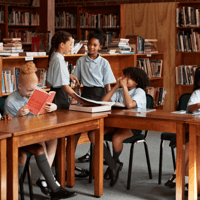
In Canada, the term “private school” is a broad umbrella, and the choices for parents considering sending their child to a private school are vast. All private schools have the same core ingredients—small class sizes, a strong focus on academic achievement, a rigorous curriculum, and exceptional teachers—but different types of schools have their own unique features and benefits. Boarding schools At boarding schools, students and staff live on campus, creating an immersive, all-encompassing...
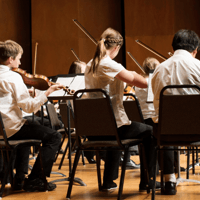
Known around the world for their top-notch education, private schools also provide an environment of nurturing a student's creativity so that artistic-minded children can learn, grow and excel. Whether it’s painting, acting, ballet, singing, animation, music or just about any other creative pursuit, the arts education provided by private schools allows artistically inclined students to hone their skills, develop their craft, showcase their talents, and fully embrace their passions.Multiple...

Many private school admissions teams in Canada cite the importance of ensuring a school is a “good fit” for a prospective student, and vice-versa–but what does that actually mean? Is it just about academics, and being able to meet the demands of the school’s rigorous curriculum, or are there other criteria that come into play? Ultimately, it’s not one or the other–it’s both. “The school should have the resources, culture and programming to support that student's academic growth, emotional...

Private schools in Canada are renowned for providing a worldclass education by creating the perfect environment for academic excellence—one that combines rigorous course work with abundant resources to support learning, and promoting intellectual and social growth. “We set high expectations and encourage independent thinking and a lifelong love of learning,” says Jennifer Baldassare, director of admissions at Lynn-Rose School in Mississauga, Ont. “Students are consistently supported and...
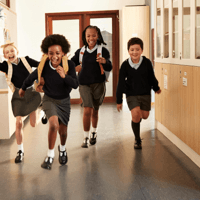
Attending a private school in Canada can be challenging. Between school work, interpersonal dynamics and navigating new social situations, some students may find themselves overwhelmed. To better foster a community environment and prioritize students’ mental health, many private schools offer peer-support programs to help students adjust, manage and thrive.“It’s about belonging…Students are at a critical point of their development and want reliable, relevant, and honest knowledge,” says Andy...