“Rodney was one of the great pearls of our industry”: Toronto chefs and restaurateurs remember oyster expert Rodney Clark
Clark, who passed away on November 6, had a major impact on the city’s food scene—and on those who worked in it

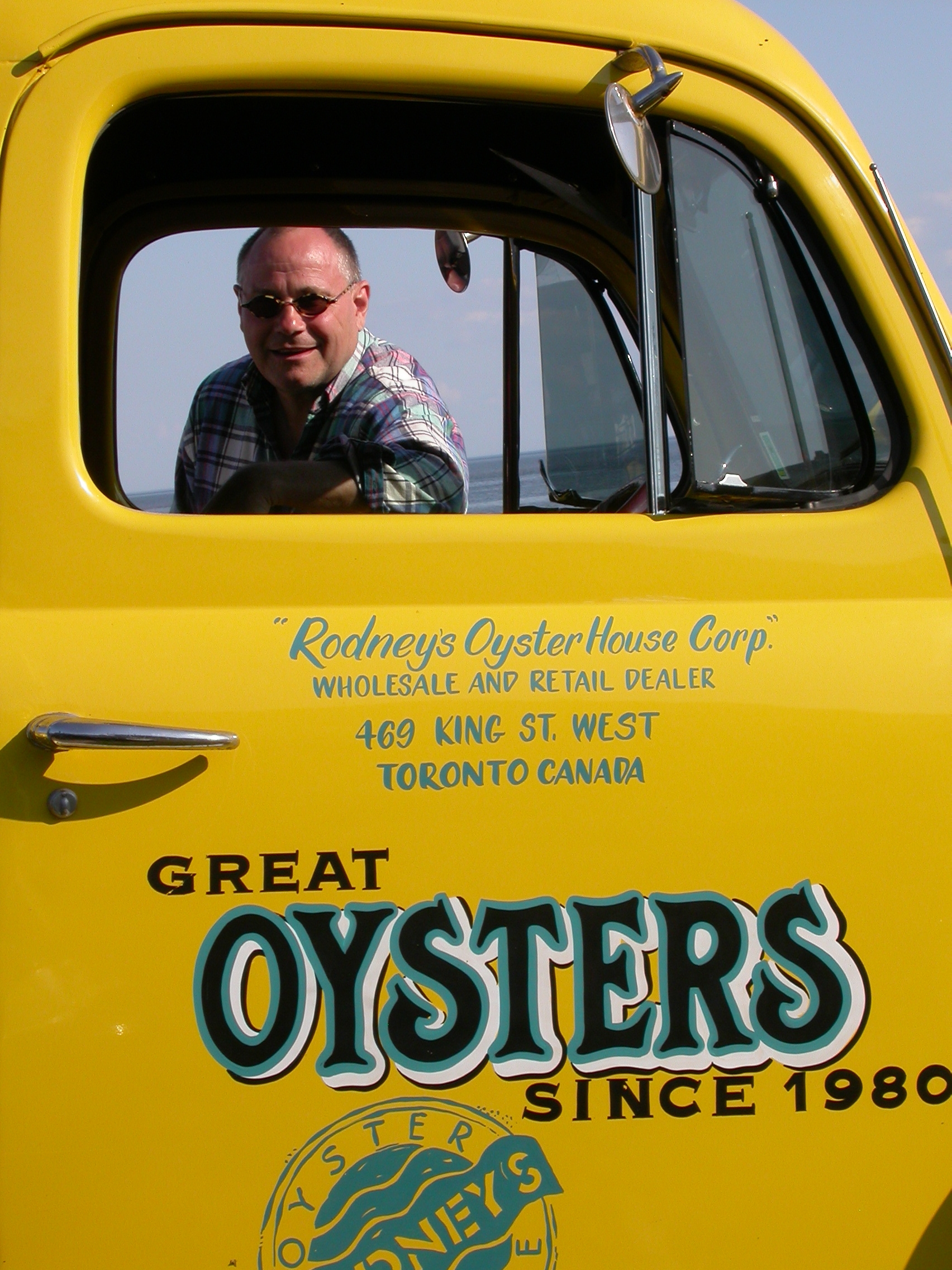
Toronto’s restaurant industry lost a singular force earlier this month. Rodney Clark, the PEI-born oyster expert, passed away on November 6 from heart failure. He was 75 years old. Known across the city as the “urban oysterman,” he was a fixture of Toronto’s food scene: part raconteur, part ringmaster, part seafood evangelist. Long before oysters were on menus city-wide, he showed Toronto diners that seafood could be fun, local and a little unruly. His namesake restaurant ran on joy and chaos in equal measure—oysters flying, champagne flowing and Rodney in the middle of it all, turning strangers into regulars with a story and a wink.
In 2001, he moved Rodney’s Oyster House from Adelaide to King West, where it still anchors the strip today. When he retired to PEI in 2017, his daughter Bronwen took over the restaurant. And this fall, his son Eamon opened Seahorse—the newest branch in a family tree rooted in shellfish and hospitality—in Summerhill.
To mark Clark’s passing, we reached out to the chefs, shuckers, friends and family who felt his impact. Here’s what they had to say.
Related: Summerhill is getting a seafood restaurant with some serious pedigree

“When people talk to me about my dad, the first thing they mention isn’t oysters—it’s the way he could take over a room without even trying. He had this mad-genius mix of humour, intensity and total confidence. At Rodney’s, he gave you his full focus—whether he was showing someone how to pull the neck off a steamer clam or pasting a newspaper clipping into the logbook with a note about some tide, fisherman or oddball fact that had caught his eye.
“Working with him wasn’t simple. He pushed, and he pushed hard. If you were shucking beside him or out representing the restaurant, he expected you to show up fully—no coasting. That pressure is a big part of why I won oyster-shucking championships and why the restaurant ran the way it did for so long.
“What’s overwhelming right now is the response. Chefs, farmers, old regulars—even people who used to argue with him—are sending these messages about how he changed their lives or shaped their careers. It’s hitting me that his impact wasn’t just in the food he served; it was in the way he paid attention to people, made them feel like part of something bigger and kept this whole community orbiting around a little oyster house.”
—Eamon Clark, son and co-owner of Seahorse

“My dad was wild. He didn’t care what anybody thought, and he loved people in this big eccentric way. I always say he was the creator of Herculean assignments—he’d dream up some ridiculous project, like an eight-by-six-foot clam-bake pit lined with cannonball-size stones and special seaweed harvested at low tide, then hand it off and simply expect you to make it happen. He could be a bit of a prick too—his standards were sky-high, and if you didn’t get the details right, he had no patience. But, if you were in, you were family. People spent hours at the bar. They celebrated weddings and wakes with him, and they still send us notes about how Rodney ‘saved’ their lives. That’s the part that gets me. It was never just about the oysters. It was about how he made people feel seen.”
—Bronwen Clark, eldest daughter and co-owner of Rodney’s Oyster House

“When Rodney first walked into the kitchen at Scaramouche in the early ’80s, he was unlike anyone else coming through the back door. Toronto was still obsessed with French imports then—you had to order from Paris if you wanted to signal excellence. And here was this eccentric, utterly genuine man talking about Malpeques with a pride of place I’d never encountered. He opened my eyes to the idea that what comes from our own waters could be every bit as compelling as what arrived by air.
“His invoices said it all: they were handwritten field notes, full of bays, tides and provenance—more detail than most menus at the time. And his little spot on Adelaide was the physical expression of that ethos: unruly, joyful and a bit wild, but grounded in real craft. He created a space where people shook off the pretence and rediscovered pleasure. In his own way, Rodney helped Toronto understand that excellence didn’t need to be imported. It was already here.”
—Jamie Kennedy, chef

“Rodney put Toronto on the oyster map. Technically, I wouldn’t be doing what I do without him. I started at Rodney’s in ’92 not knowing a thing about oysters, and he fixed that fast. He’d talk tides, growers, shells, meat quality, flavour—before you knew it, you were hooked. He was a character in the truest sense: sharp, witty, a little wild, always with that twinkle that meant something was about to happen. He’s the one who taught me what Maritime hospitality looks like: make people feel welcome, give them a story and make sure they leave happier than when they came in.
“He was shuckin’ particular about the product—shape, size, grade—and that discipline set the standard for the rest of us. The shucking and service style most Canadians use today comes straight out of his oyster house. And the lineage of influence is unreal: Coast to Coast, Oyster Boy, Starfish, Tide and Vine, Joe Beef. In the oyster world, it’s basically the Kevin Bacon effect—everyone is just a couple of degrees from Rodney Clark.”
—Patrick McMurray, oyster sommelier

“I remember Rodney fondly. When I had just opened Lotus in the 1980s, I visited his restaurant and sat at the bar. It was clear how passionate he was about oysters. He stood behind the bar shucking them with ease and handing them to me to try.
“At the time, I didn’t know much about oysters, so the whole experience was an education. Rodney spoke about them with the knowledge and enthusiasm of a fisherman. He seemed to have connections everywhere, and he brought oysters into Toronto from all over, each with its own distinct flavour.
“I also remember how his food always captured the pure taste of the ocean. Simple dishes—steamed crab, boiled lobster with butter—elevated by their exceptional freshness and quality.”
—Susur Lee, chef
Related: Five of Toronto’s best seafood towers

“Rodney was one of those larger-than-life characters you never forget. He was always smiling, and he always had a story to tell. He was an iconic East Coaster through and through, with an infectious energy that could light up any room and a spirit of warmth, kindness and generosity. When Rodney was at an event, you knew it was going to be a good one.
“I first met him years ago at Centro during one of our private events. He’d roll in with that old oyster boat of his—sometimes at the last minute—but there was never a hint of panic. Within minutes, he and his crew of shuckers would be set up and in full swing, chatting with guests and shucking at full speed. As the night wore on, the stories would get longer, the drinks a little stronger and the laughter even louder. He was the life and soul of a party.
“Rodney was one of the great pearls of our industry. He was generous with his time, his knowledge and his oysters. He was a natural teacher, helping chefs and young cooks understand the craft and culture of oysters—their beauty, their honesty, their connection to the sea. Like the oysters he loved so much, Rodney was the real deal: raw, honest and authentic. He reminded us that great hospitality doesn’t need to be fussy or overthought—it just needs good food, good drink and good company.”
—Michael Bonacini, chef co-owner of Oliver and Bonacini

“I’ve been buying from Rodney for as long as I’ve had restaurants. In the ’90s, after a long service at North 44, I loved ending my Saturday nights at that first little spot on Adelaide. It felt like a speakeasy—live king crab, oysters everywhere and people having way too much fun. Rodney himself was confident, smart, totally no-bullshit, never impressed by titles, always quirky and irreverent in the best way. Sometimes I’d open a delivery and find a Mason jar of screech tucked inside, just because. And even after he moved to King West, I kept going. The food stayed rock solid, right down to that wonderfully kitschy chocolate mousse in the champagne coupe. People like him don’t come along often. He lived the oysters, talked the oysters, and brought a joy and wildness to Toronto that’s hard to replace.”
—Mark McEwan, chef and owner of the McEwan Group

“My whole life, I was immersed in French cooking. After dining at Rodney’s—both the old spot and the new one—and befriending the characters who worked there, I started to see the oyster differently. It’s been a mainstay in every restaurant I’ve opened since. It went from something that was just on the menu to something I consider the most important thing in the room.”
—David McMillan, chef

“I was the third employee at the original Rodney’s back in 1986, a 22-year-old who somehow ended up helping design the place, hire the staff and manage a crew of people twice my age. Rodney was a big kid himself: ebullient, chaotic, wildly charismatic. The restaurant was tiny, maybe 32 seats, and it went from zero to full-blown party the second we opened the doors—there were bikers, fashionistas, chefs, everyone.
“Behind the scenes, it was pure ’80s mayhem. Before we even opened, the guys would take booze as tips from catering gigs, so the warehouse was stacked with bottles. They’d forget half the equipment because they’d end up joining the parties they were supposed to be working. I often felt like the only adult in the room—unlocking the place in the morning and finding someone asleep on a pile of kitchen rags; trying to hold things together while our financier, Katharine Von Offenheim, reminded us we were supposed to be running a business, not just having a good time.
“The greatest thing Rodney did was seize the moment. Toronto’s food scene was just waking up—people were travelling more, tasting new things—and oysters landed at exactly the right time. Rodney pushed that wave forward with his whole East Coast shtick, even though he wasn’t a country kid but a townie from Summerside. Without his personality and persistence, oysters probably wouldn’t have taken off in Toronto the way they did. And Oyster Boy honestly wouldn’t exist without him. At events people would ask, ‘Are you Rodney the oyster man?’ and I’d say, ‘No, I’m Adam the oyster boy.’ A decade later, that became the name of my own restaurant. Rodney and I fought plenty, but he also sent me letters saying I was the best worker he’d ever had. He was the best frenemy I ever had—big, chaotic, impossible and unforgettable—and because he believed so deeply in what he was doing, the rest of us ended up believing too.”
—Adam Colquhoun, co-owner of Oyster Boy


Caroline Aksich, a National Magazine Award recipient, is an ex-Montrealer who writes about Toronto’s ever-evolving food scene, real estate and culture for Toronto Life, Fodor’s, Designlines, Canadian Business, Glory Media and Post City. Her work ranges from features on octopus-hunting in the Adriatic to celebrity profiles.