Hoop Dreams
After years of false starts, months of nail-biting negotiations between the league and the players’ union, and an 11th-hour scramble to assemble a roster, Toronto finally has its own WNBA team. Now it just has to live up to the hype. Inside the making of the Toronto Tempo
The announcement dropped early on May 23, 2024: the WNBA had officially selected its first expansion outside the US. Toronto would be the league’s 14th team. It was the news local basketball fans had been waiting for. The previous spring, 19,000 people had packed a sold-out Scotiabank Arena for an exhibition game between the Minnesota Lynx and the Chicago Sky. It was the largest crowd for a pre-season game in the league’s history, revealing a potential goldmine of Toronto fandom.
The new team’s owner, Larry Tanenbaum, had been pushing for expansion to Toronto for more than two decades, and he knew just who should lead it: Teresa Resch, a long-time Raptors executive. He’d told Resch that he was going to bid on a WNBA team, that he wanted her help putting that bid together, and that, if they won the bid, he wanted her to step down from the Raptors and head up the new franchise. She immediately agreed, and now that the team was a reality, she got to building. She would need executives, coaches, trainers and operations staff. She’d have to secure sponsors. The team already had a venue—Coca-Cola Coliseum—but it didn’t have a name, a logo or any other branding.
The next six months were a whirlwind, but by December, the team had its name, with the Tempo beating out the Towers, the Traffic and the 6ixers. It also had a logo—a T inside a speeding basketball—and a colour scheme, the powder blue and burgundy nodding to Blue Jays blue and Raptors red. Resch had worked with her new chief marketing officer, Whitney Bell, on the merchandising, connecting with companies such as Roots, Peace Collective, New Era, and the Give and Grow. The Tempo-branded collection—hats, jackets, tees, planters made out of upcycled basketballs—dropped soon afterward.
The timing was perfect. After decades of boom-and-bust struggle, the WNBA had grown wildly popular and wildly profitable. Revenue increases throughout 2024 led to skyrocketing team valuations, which shot up to $3.5 billion collectively, a 180 per cent increase from the previous year. On average, franchises were worth $269 million each, up from $96 million.
The league had found its groove, but most of its players were still being paid less than the average public-school teacher. When Caitlin Clark, the NCAA phenom considered by many to be the best college player to ever touch a ball, entered the league in 2024, her starting salary was just over $76,000. The maximum base salary in the WNBA was $208,219. Meanwhile, that summer, the league signed a monumental 11-year media rights deal with Disney, Amazon and NBC worth $200 million a year, a 233 per cent increase over their previous deal.
So the players set out to get their money too. That October, they opted out of their existing collective bargaining agreement a year early. They began negotiating for a new structure that would, among other things, dramatically increase salaries and bump their gross revenue share from a reported nine per cent to 27.5 per cent. The league claimed that figure would jeopardize its financial well-being, but the players were primed for battle. At the 2025 All-Star Game the following July, they wore T-shirts that read “Pay Us What You Owe Us,” and when the Minnesota Lynx’s Napheesa Collier accepted the MVP award from commissioner Cathy Engelbert, the crowd erupted, chanting, “Pay them!”
Months of discord followed. The previous agreement was extended to late November, then to early January. But, when the contract expired in the new year, the league and the union remained far apart. For the Tempo, it was the best and worst of times. With a new agreement on the horizon and the possibility of much bigger paydays, many veterans in the league had intentionally signed one-year contracts. When the team went to build its roster, it would have unprecedented access to these unrestricted free agents, some of the WNBA’s biggest talents. But, as the negotiations dragged on and acrimony between the union and the league seemed only to grow, Toronto had run into a brick wall.
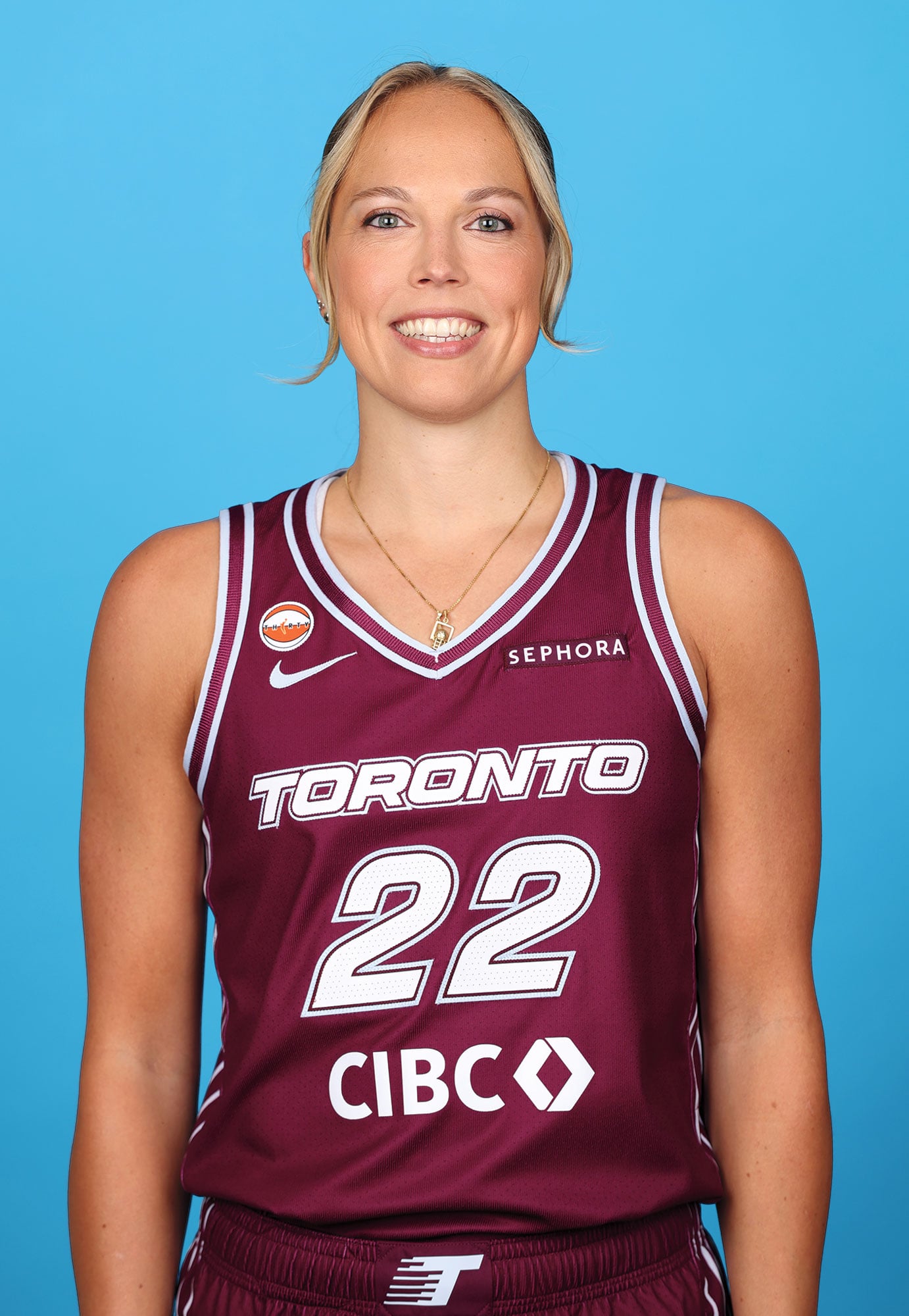
Julie Allemand
Guard
Without an agreement in place, there would be no expansion draft, no college draft, no free agency, no training camp. As each day passed and the scheduled tip-off—May 8, 2026—approached, it looked like the season would be delayed. What would be a huge problem for existing teams spelled potential ruin for the Tempo. Sports leagues don’t operate in a bubble—the people who run them and the broadcasters who cover them plan meticulously to avoid scheduling conflicts. If everyone sticks to the dates circled in their calendars, everyone gets eyeballs and sports fans aren’t forced to choose between their favourite teams. Traditionally, the WNBA tips off in May. Postpone the start date by a few weeks and Toronto’s fledgling team would run full-speed into the titan of sporting events: the FIFA World Cup. Lower viewership for the Tempo would mean dramatically reduced revenue—a nosedive in ticket sales, interest from sponsors and enthusiasm from anyone but hard-core fans.
Whether money was coming in or not, the Tempo still had bills to pay. There was payroll for the executive team and staff that had been brought onboard, the venue costs tied to securing Coca-Cola Coliseum, the development of a new performance centre and training facility. If the loss of momentum caused by a delay could hobble the Tempo, what would happen if the season was cancelled altogether? All of professional women’s sports was glued to the contract negotiations, but few people more than Teresa Resch.
On St. Patrick’s Day, as New Yorkers packed Fifth Avenue to watch the parade and drink green beer, representatives from the WNBA and the players’ union gathered at Manhattan’s Langham Hotel. It was the eighth day of negotiations, most of them 12 or more hours long. But, then, in the middle of the night, the league and the union finally came to a verbal agreement. Tears were shed, fists bumped, hugs exchanged. Englebert descended to the hotel lobby to let the media know, accompanied by the union’s executive committee, which included WNBA icons Nneka Ogwumike and Breanna Stewart. It would take a couple more weeks for everything to be signed, but Terri Jackson, executive director of the union, declared victory. “I think this can be summed up in two words: player empowerment,” she said, holding a water glass filled with champagne. On Instagram, an exhausted and giddy executive committee put it somewhat differently, posting a video of themselves in an Uber singing along to “Gangsta’s Paradise” by Coolio: “I’m a educated fool with money on my mind / Got my ten in my hand and a gleam in my eye.”
One of the union’s secret weapons was a Nobel Prize–winning Harvard economist named Claudia Goldin, who was advising them pro bono. She had reminded them repeatedly to stay focused on the numbers. “It’s just math,” she said—math and self-confidence. In the end, the players got almost everything they asked for. The salary cap jumped from $1.5 million to $7 million, with a minimum salary of $270,000. The average salary rose from $118,000 to $580,000, a nearly 400 per cent increase. The Las Vegas Aces’ A’ja Wilson, for example, who received $200,000 in 2025 while leading her team to their third title in four years, would now get $5 million over three years. Collectively, the players would receive a 20 per cent revenue share—not quite the 27.5 per cent they wanted, but a major jump.
The players and the league may have found common ground, but professional women’s basketball has entered uncharted territory. The increased revenue share gives the players a greater stake in the league, making them more partners than employees. But, even with a historic deal, will the tension between the league and the players carry over into the season? Will the WNBA’s fears of insolvency be proven prophecy or bluff?
The Tempo hasn’t had time to worry about these unknowns—at least not in front of a journalist. When I asked Resch how she felt about the chaos of the past few months, she offered up—what else?—a sports metaphor: “You can spiral every day of the week if you want. But, in sports, uncertainty comes with the territory. If you spiral and think about the worst thing ever, you’d never get on the court. You’d never play. You’d never shoot a three-pointer because you’d be afraid to miss.”
Professional women’s basketball existed before the WNBA, but it didn’t enter the public imagination until 1996. That year, the US women’s team went undefeated over eight games, winning gold at the Olympics in Atlanta. Considered the best women’s team ever assembled, the roster included giants of the game Sheryl Swoopes and Dawn Staley. The media dubbed them “the Women’s Dream Team.” Hoping to capitalize on surging interest in the women’s game, the NBA created the WNBA, serving as its sole owner for five seasons. The league’s inaugural game was on June 21, 1997. With more than 14,000 fans in attendance and five million more watching at home, the New York Liberty defeated the Los Angeles Sparks 67–57.
Related: Kia Nurse is helping her Tempo teammates learn Toronto
A few years into the WNBA’s existence, Larry Tanenbaum decided that he wanted a women’s team of his own. They were, at roughly $10 million each, relatively cheap. Nobody has shaped the landscape of Toronto pro sports more than Tanenbaum. He made his money in construction but, in the early 1990s, turned his attention to his true passion. Over the past couple of decades, through various corporate entities—most prominently Maple Leaf Sports and Entertainment—he acquired a significant piece of local sports franchises, including the Leafs, the Raptors, the Argos, Toronto FC and the Marlies. But, when Tanenbaum approached the WNBA about expansion in the early 2000s, he was rebuffed by the NBA’s then-commissioner David Stern. It was early days at MLSE, and the Raptors were lousy. “David Stern told us we weren’t ready,” says Richard Peddie, then CEO of MLSE, “and David Stern was right.”
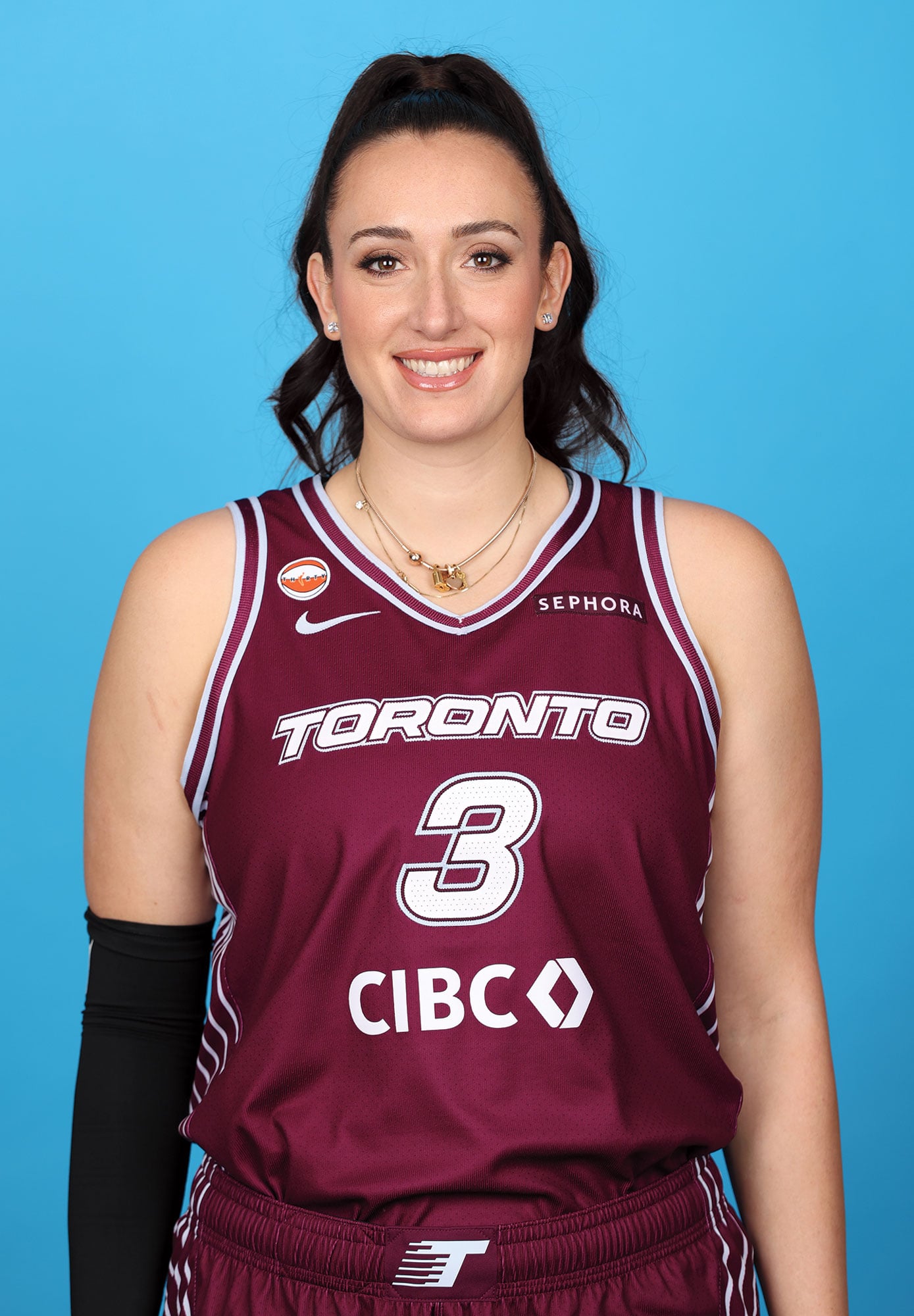
Marina Mabrey
Guard
In some ways, the WNBA wasn’t quite ready for Toronto either. While the level of play was extraordinary, dominated by future hall of famers such as Diana Taurasi, Sue Bird and Candace Parker, the league struggled to find its footing. The Detroit Shock, one of the first expansion teams, exemplified the WNBA’s erratic ascent. In the early 2000s, it oscillated between mediocrity and excellence, breaking attendance records one year, playing to empty arenas the next. When the owner of the team died in 2009, his widow immediately sold it; the Shock had, over the years, lost $20 million. Accordingly, the pay in the WNBA remained low. In 2015, the Phoenix Mercury’s Taurasi, the league’s all-time leading scorer, was paid $107,000, just shy of the league maximum. To make ends meet, she played in Russia during the off-season, and that summer, her Russian team paid her $1.5 million to rest up and not play in the WNBA.
Related: WNBA players are getting a huge raise, and it’s great news for the Toronto Tempo
Still, Tanenbaum never gave up. On the spectrum of sports team owners, he’s less like the LA Clippers’ in-your-face boss Steve Ballmer and more like Herb Simon, the unassuming owner of the Indiana Pacers. Tanenbaum is reserved, private, press shy (he declined to be interviewed for this story), but he’s also deeply committed. He regularly invites his teams to his Forest Hill mansion for dinner. He was right there hoisting the Larry O’Brien trophy with Masai Ujiri after the Raptors won the 2019 championship. And for the past nine years, he’s been the chairman of the NBA’s board of governors. On the rare occasions when he speaks publicly, he’s fond of highfalutin statements like, “Sports can really build things that are important to our society.”
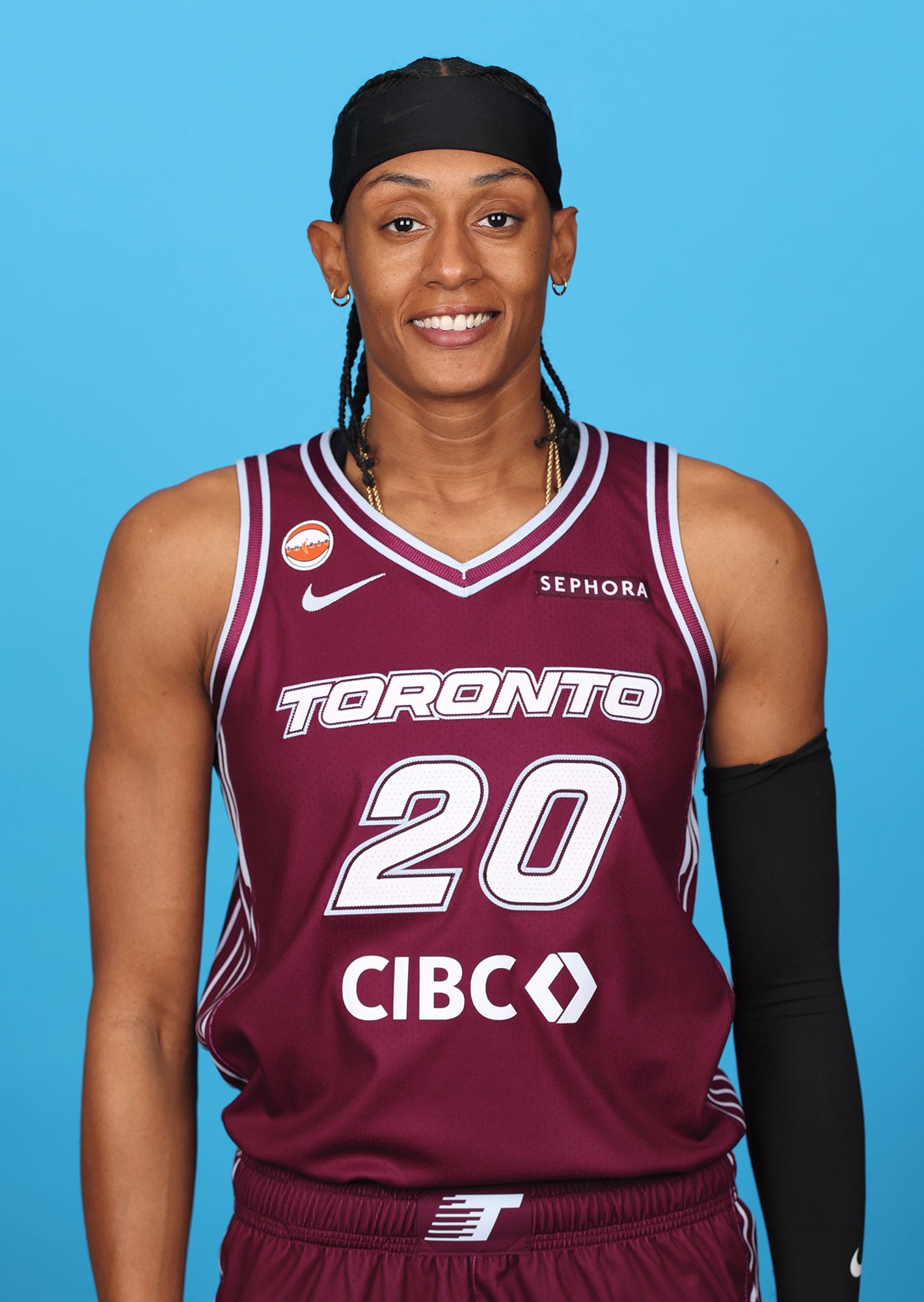
Brittney “Slim” Sykes
Guard
In 2024, when Tanenbaum tried again to bid on a WNBA team, he went once more to MLSE. (His company Kilmer Sports currently co-owns the sports empire with Rogers but is slated to sell its remaining 25 per cent stake to the telecom giant later this year.) His timing had improved considerably. Basketball’s popularity in Canada had ballooned beyond what anyone expected. The Raptors had won a championship and were now worth $4.4 billion. There were more Canadian players in the NBA than ever before, with superstars Shai Gilgeous-Alexander and Jamal Murray leading teams to championships.
Related: A Toronto Tempo training facility will be built at Exhibition Place
At the same time, the WNBA had taken on a new lustre. In 2022, it executed a major capital raise, securing $75 million from new investors and existing owners, the largest ever in women’s sports. Attendance and revenue began to boom, and it looked again to expansion. There were a number of theories for this explosion of interest. Most famously, there was the Caitlin Clark effect: her arrival in the league, accompanied by unprecedented levels of hype, brought new fans to the game. Clark’s fellow 2024 rookies Angel Reese and Cameron Brink also became household names for both their on-court skill and their off-court style, with social media and podcasts connecting them to their fan bases in new ways.
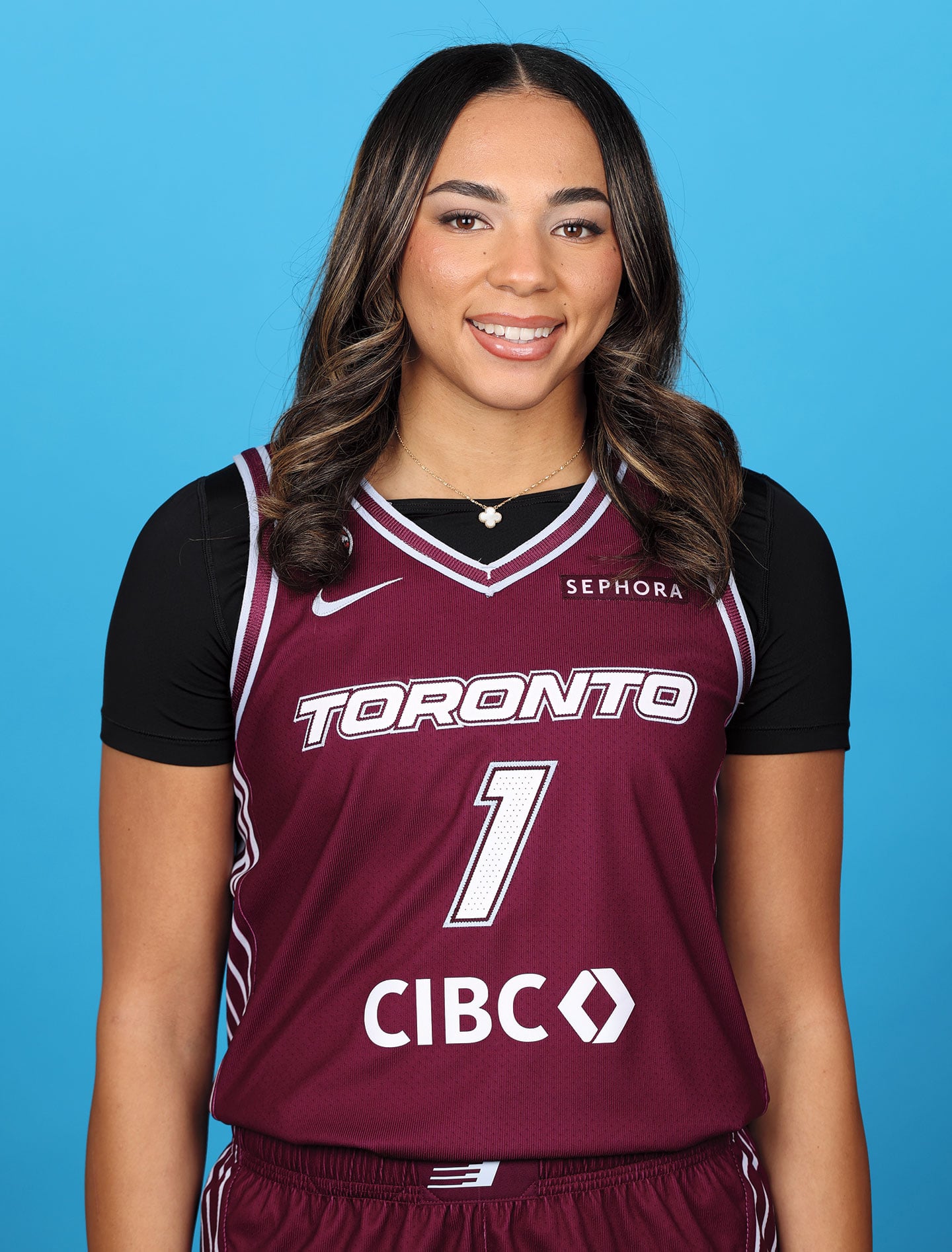
Kiki Rice
Guard
The fervour surrounding the WNBA was playing out across other sports too. In 2021, Sue Bird, former soccer star Alex Morgan, snowboarder Chloe Kim and swimmer Simone Manuel started Togethxr, a media company designed to celebrate the cultural and economic power of women athletes. They released a line of T-shirts and hoodies with the slogan “Everyone Watches Women’s Sports.” Proving their point, a flurry of pro organizations followed: the Professional Women’s Hockey League in 2023, then Unrivaled (an off-season basketball league), the Pro Volleyball Federation (now Major League Volleyball) and soccer’s Northern Super League.
When Tanenbaum pitched MLSE for the second time, Edward Rogers, who sat on the board, was reportedly unmoved. So Tanenbaum decided to go it alone. Kilmer paid $115 million for the privilege, with $50 million for the franchise fee and the rest to upgrade Coca-Cola Coliseum and build the new practice facility.
Long before she was picking out team colours, coaches and players, Teresa Resch was logging time on the court in rural Minnesota, the heartland of American women’s basketball. As a kid, she played all the sports: volleyball in the fall, basketball in the winter, softball in the spring and golf in the summer. After getting an MBA in sports administration, she landed at the NBA. She worked in logistics for the league’s Basketball Without Borders international camp program, where she met Masai Ujiri, who was the camp director in Africa. In 2013, when he was hired as GM of the Raptors, he invited her to join him as director of basketball operations and player development.


Larry Tanenbaum
Serena Williams

Masai Ujiri

Geoff Molson

France Margaret Bélanger

Lilly Singh

Sukhinder Singh Cassidy

Scott Lake

Reetu Gupta
Larry Tanenbaum
Serena Williams
Masai Ujiri
Geoff Molson
France Margaret Bélanger
Lilly Singh
Sukhinder Singh Cassidy
Scott Lake
Reetu Gupta
Larry Tanenbaum
Serena Williams
Masai Ujiri
Geoff Molson
France Margaret Bélanger
Lilly Singh
Sukhinder Singh Cassidy
Scott Lake
Reetu Gupta
Larry Tanenbaum
Serena Williams
Masai Ujiri
Geoff Molson
France Margaret Bélanger
Lilly Singh
Sukhinder Singh Cassidy
Scott Lake
Reetu Gupta
Resch had never worked on the team level before, but Ujiri told her she could write her own job description. And that’s exactly what she did, becoming what she now calls “the glue guy.” She oversaw travel, coordinated equipment, and generally served as a liaison between the team and MLSE. When Ujiri arrived in Toronto, he says, there was just one woman in operations, out of a staff of 50. By the time he left, he had increased that number to 20. Resch eventually sat at the top of those ranks, becoming Ujiri’s chief of staff. She introduced town halls, where season ticket holders meet with management, coaches and players; handled the building of the OVO practice facility; and was the lead Raptors executive on the ground in Tampa during the Covid-bubble season. “She’s very organized,” Ujiri says, “very detail-oriented, creative, somebody who brings people together.” As the Raptors developed into a championship team, she was by Ujiri’s side for every major trading and hiring decision.
I met Resch for the first time this past February at SixtyEight, the café-lounge at the top of Scotia Plaza, where Kilmer has its offices. She is tall, athletic, both sunny and forceful, an extrovert’s extrovert. Throughout most of Resch’s time with the Raptors, the WNBA was rarely on her radar. But then women’s sports started blowing up. Canadian women were winning more Olympic medals than men, with the women’s soccer team taking gold in 2020; there was better sports programming for women and girls; more women athletes were heading to the NCAA to play; and crucially, people were finally keeping track of these things. “For the first time, there started to be data around the business of women’s sports,” Resch says. “There was actual concrete, quantitative data about how valuable the fan base is and why women’s sports is the next place you should be investing.”
According to Resch, Tanenbaum saw all these things. “I took a little bit of a risk,” she says about leaving her job with the Raptors. “But following Larry Tanenbaum on a business venture, especially sports business, is not very much of a risk.” Resch’s first big task was hiring a general manager. Given her own lack of history with the league, she wanted someone with deep knowledge, experience and, in her words, “good vibes.” Resch found all of this in Monica Wright Rogers, a former guard for the Minnesota Lynx who had helped them win titles in 2011 and 2013 and had played all over the world. After persistent knee injuries curtailed her career, she found her way to coaching and then, eventually, to the Phoenix Mercury, where she became assistant GM. Persuading Wright Rogers to come to Toronto was easy: she had been here before, loved the story of the championship Raptors team and believed that women’s sports in Canada were about to take off.
When I met with Wright Rogers, she spoke at length about being impressed by what Resch had accomplished. “She’s a woman in a men’s space, and she worked her tail off to help make that franchise the best in the NBA,” Wright Rogers said. “That resonated. Because when you’ve had to work to earn everything you have from each level of your career, and you lock arms with people who are similar, there’s nothing you can’t accomplish.”
Kia Nurse
Guard
But a general manager and a president are nothing without a head coach. Around the time Resch went looking, one of the WNBA’s most renowned coaches, Sandy Brondello, suddenly became available. The New York Liberty, to the disbelief of many, opted not to renew her contract even though Brondello had led the team to their first championship, in 2024. Like Wright Rogers, she’d also played professionally. A four-time Olympian, she’s considered one of the best shooting guards to come out of Australia. As a member of the Detroit Shock, she played in the first-ever WNBA All-Star Game.
In Brondello, Toronto gained a steady hand—in her 15 years of coaching in the WNBA, she’s never missed the playoffs—and like Wright Rogers, she keeps her ego in check. She also elected to come here, choosing Toronto over the established teams courting her, including the Dallas Wings and the Seattle Storm. The opportunity to create a new team was irresistible. “I thought it would be a nice little challenge to build something from scratch with really passionate people,” Brondello says.
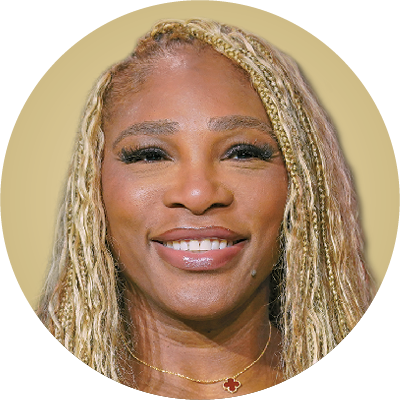
With Resch, Wright Rogers and Brondello in place, the Tempo became the only WNBA team with three women occupying the top roles in the organization. The ownership group, whose members were gradually revealed as the Tempo staff was being assembled, also includes women powerhouses: TV host Lilly Singh, Montreal Canadiens executive France Margaret Bélanger, and most notably, tennis superstar Serena Williams, among others. In early April, the Tempo revealed another ace up its sleeve: Ujiri, Resch’s old boss and mentor, had signed on as an owner. While not involved in day-to-day operations, he’s assisting with strategy and working on a global coaching mentorship program for women and non-binary coaches called Tempo Rising. At Giants of Africa, the basketball camp Ujiri continues to run across several African countries, it’s imperative that there are an equal number of boys and girls and that they’re treated equally. “They get the same shoes. They get the same time on the court. They get the same stage,” he says. “And I’ve seen that, when the opportunity is given, women just rise.”
It’s no surprise that Resch is a sports fanatic—she has season tickets for the Sceptres and AFC Toronto—but she’s also a big music fan. This past winter, she got into local cover bands Dwayne Gretzky and Bubblegum Bikini, and three summers ago, she flew to California to see Taylor Swift close out her blockbuster Eras Tour. “It was a euphoric experience,” she recalls, “the way that everybody was there for the same thing. You felt connected to the person sitting next to you even if you were from different backgrounds. People came to those concerts by themselves because they knew they would find their people.” That is the feeling Resch wants Tempo games to have.
It’s not a far-fetched ambition. In 2014, after the league’s research found that 21 per cent of lesbians in the US had attended a game, the WNBA became the first American pro sports league to market to LGBTQ communities. Since then, it has been the undisputed progressive wing of pro sports, an AOC in a MAGA-plagued world. It’s a highly visible forum where incredibly talented, skilled and hard-working women are celebrated for performing feats of elite physical prowess. More than two-thirds of those women are Black. And a good number of them are openly queer and married to, dating or in situationships with fellow players. At this year’s college draft, the first and second picks were queer. Azzi Fudd, who went number one, was selected by the Dallas Wings, where she joined her girlfriend, Paige Bueckers, who was last year’s number-one draft pick. It’s fair to say that this sequence of events has never been seen in the NBA.
In the past decade, a growing number of players have also used their platforms to push for social and political change. In 2016, after Philando Castile, a Black man from Minnesota, and Alton Sterling, a Black man from Louisiana, were killed by police, the four captains of the Minnesota Lynx held a press conference wearing Black Lives Matter T-shirts that read “Change Starts With Us—Justice & Accountability.” Other teams followed, wearing black T-shirts during warm-ups and refusing to talk about anything during pressers other than police violence and their protests. While the WNBA initially fined the players involved, it later got on board, dedicating its 2020 season to justice for Breonna Taylor, also killed by police. That same year, the Atlanta Dream turned on its owner, Kelly Loeffler, over her derisive remarks about Black Lives Matter, both forcing her to sell the team and organizing for her Democratic opponent in the 2020 US senate race.
The league’s political dimension has become even more apparent in recent months. While NBA superstars tiptoe around hot-button subjects such as Gaza—looking at you, LeBron—and NHL players cozy up to the White House, Unrivaled co-founder Breanna Stewart holds up anti-ICE signs at games. One of my favourite players, the Chicago Sky’s Natasha Cloud, is a dervish of activism: she joined forces with Moms Demand Action to prevent gun violence, is a vocal critic of Israel and collaborated with New York mayor Zohran Mamdani on a social media campaign about cleaning up the city.
Nyara Sabally
Centre
The players’ ongoing fight for more equitable pay has, of course, been their most public battle. In this economically uncertain, union-busting era, their win is a testament to the power of solidarity. Claudia Goldin, the union’s adviser, said that the new agreement’s 400 per cent pay increase is the largest negotiated by any union in history.
Activism and idealism aside, the WNBA is still pro sports: it’s still entertainment, and it’s still a business. And since April, Resch and her team have been in overdrive. They had a handful of weeks to turn their own hypotheticals—a starting five, a team culture—into a reality. “The NBA is a marathon,” says Wright Rogers. “The WNBA is a sprint.” She’s referring to the length of their respective seasons under normal circumstances. But, now, in this most exceptional of situations, the lead-up to the season has been a 100-metre dash. With all the drama of the past few months finally in the rear-view, the real work has begun.
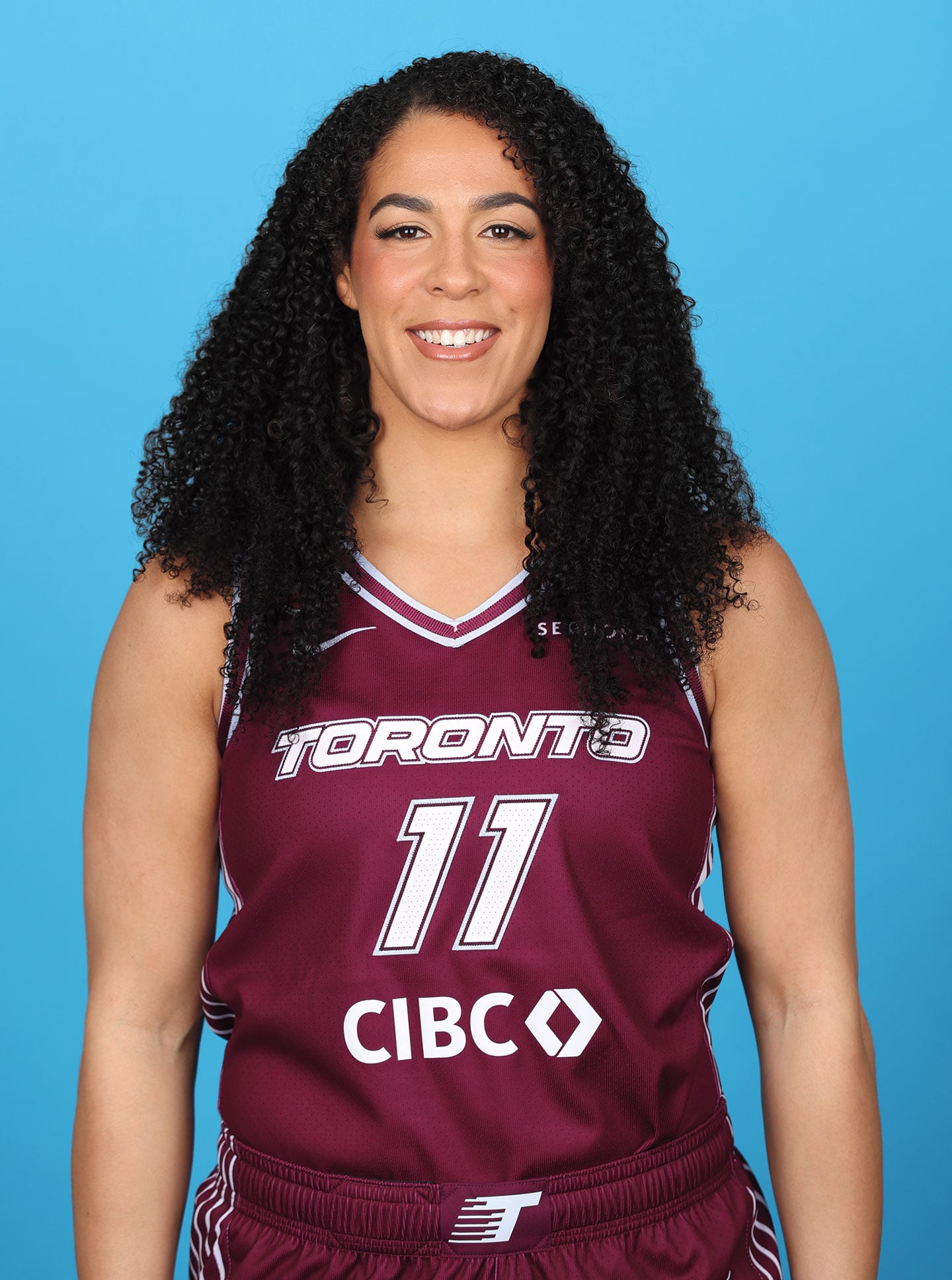
Toronto’s inaugural squad is dominated by international players—partly because of Brondello’s and Wright Rogers’s own experiences, partly a nod to Toronto’s diversity, and partly a reflection of just how global basketball has become. The Tempo has a couple of tough high-profile guards in Brittney “Slim” Sykes and Marina Mabrey, the first backcourt duo in the league to receive million-dollar contracts. There’s UCLA’s Kiki Rice, fresh from winning the NCAA championship. And there’s Kia Nurse—Canadian sports royalty, TSN analyst and an Olympian with almost a decade in the league. “There have been a lot of firsts in my career, but this might be the coolest one,” she said at training camp, less than a week after signing with the team. “I like to think that, when all is said and done and I look at the WNBA being in Canada, I had a hand in helping bring that here. I’m very, very grateful for the opportunity to play at home.”
The day after the college draft, the Tempo held their first real public event, a court-unveiling and pep rally called “Before the Bounce.” It was warm inside Coca-Cola Coliseum, the collective heat of roughly 5,000 season ticket holders creating its own microclimate. The league’s fans are 57 per cent men and 43 per cent women, but this crowd skewed women—lots of friend groups and multi-generational families, all wearing newly minted merch—and diverse enough to remind me of something Peddie told me: “A hockey game looks like old Toronto, a basketball game like new Toronto.”
Raptors superfan Nav Bhatia sat courtside in a maroon Tempo jersey. Ujiri floated around, and the Tempo’s dancers, the Rhythm Section, made their public debut. TSN’s Kayla Grey interviewed Resch, Brondello and Wright Rogers at centre court. Nurse, already positioned as the face of the franchise, received a standing ovation. The constant drumbeat of corporate sponsorship—almost every moment was branded, from the “Sephora Big Beauty Bag Sprint” to the “GoodLife Flex Cam”—was a tedious reminder of the larger economic realities, but overall the energy was buoyant and infectious. As I made my way through the venue, I ran into a couple of my neighbours, then another neighbour and her wife, then a friend I hadn’t seen in years. I later saw on Instagram that other people I knew had been there with their kids. Even before an actual game had been played, I could feel that kinship Resch had talked about.
A couple of days after the pep rally, I caught up with two of the neighbours I’d run into. Both women in their mid-50s, they had grown up playing basketball in Scarborough. When Tempo season tickets went on sale, they and four other university friends jumped at the chance to buy them. Nobody in their squad is a die-hard WNBA fan—they prefer college basketball—but they are looking forward to the bonding experience and the chance to see some great players in action.
And then there’s the irresistible pull of being part of history. “It’s been a long road to a moment like this,” one of them told me. For the generations coming up behind them, the girls hooping in Scarborough and everywhere else in Canada, this new team isn’t just about exciting basketball—it’s about redefining what is possible.
This story appears in the June 2026 issue of Toronto Life magazine. To subscribe, click here. To purchase single issues, click here.
An earlier version of this article stated that there were nearly 9,000 season ticket holders in attendance at the Tempo’s Before the Bounce pep rally. In fact, there were roughly 5,000 season ticket holders in attendance