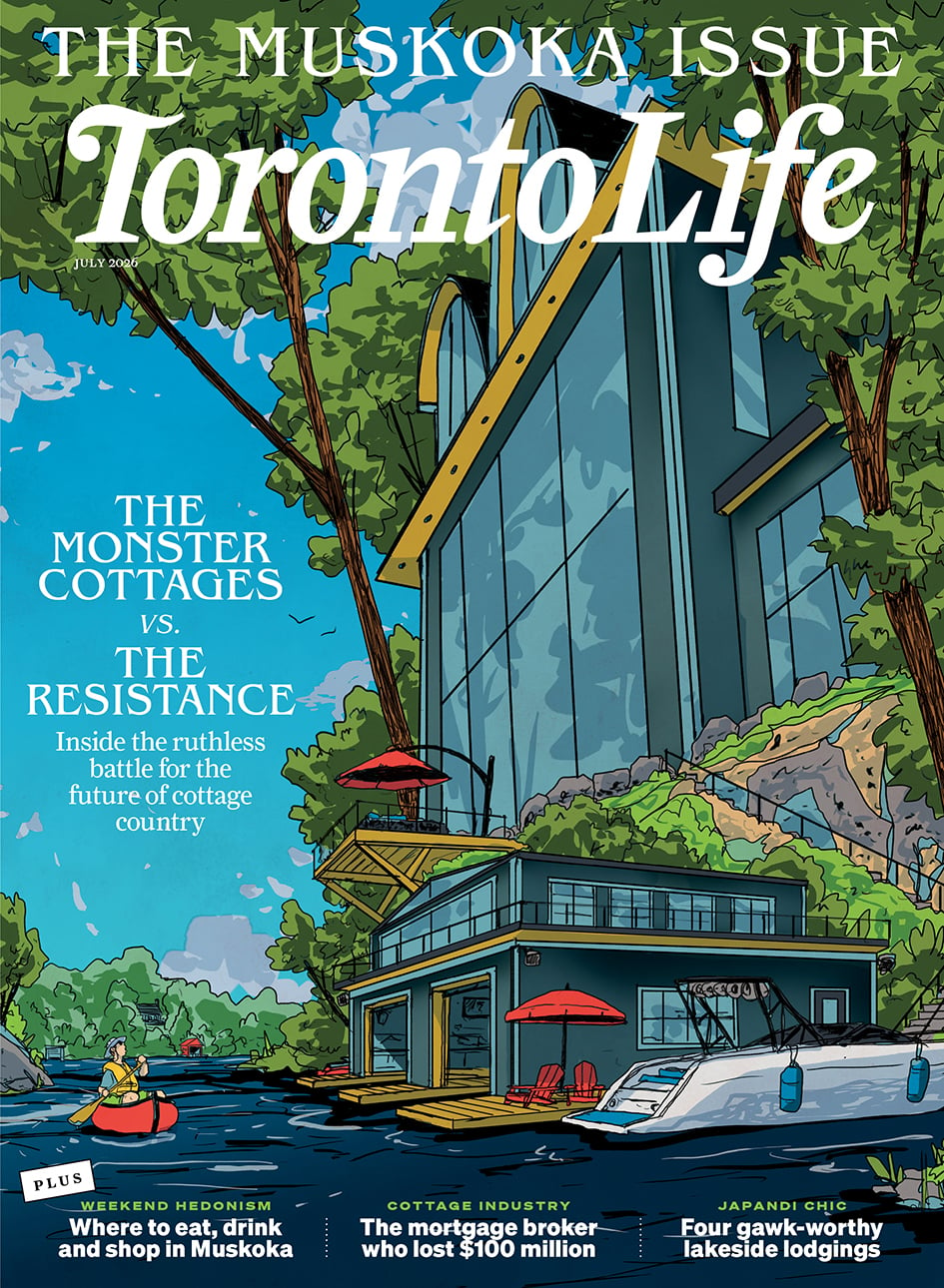
Editor’s Letter: Who is cottage country for?
The explosion of short-term rentals and the wild parties they attract is disturbing the peace full-time residents covet

Tiny Township is aptly named. At just 335 square kilometres, it comprises a small collection of homes and cottages on the southeastern edge of Georgian Bay. The first time I came upon it, Covid lockdowns were turning Torontonians squirrelly. I opened my laptop and reflexively typed “cottage for sale.” I wasn’t exactly in the market, but the search itself felt therapeutic. Up came a bungalow with golden sands and azure waters, the picture of tranquility, an escape from urban drama. If only.
At the time, cottage country was experiencing an unprecedented surge in popularity, fuelled by cabin-feverish city dwellers willing to pay anything for some wide open space. Tiny, given its natural beauty and proximity to Toronto, was especially popular. One beachfront property, which had sold in 2002 for $160,000, went for $1.85 million to a medical professional from Toronto in 2021.
Many of these new buyers needed rental income to help cover their mortgages, and Tiny, at the time, had no rules against short-term rentals. With demand so high, buyers saw a viable financial path and signed on the dotted line.
Before long, the tranquil vibe of Tiny had changed. Revved-up weekend warriors lugging cases of beer and Red Bull and complicated speaker systems showed up in droves, ready to blow off steam. To many locals, it was as if King West had shifted north for the summer.
The backlash started, as it does, online. The area Facebook page registered complaints about loud music, raucous behaviour, flagrant trespassing and overflowing septic systems. United by collective outrage, the locals decided they weren’t going to take it any more.

A Toronto real estate broker became the test case. His family had never owned a cottage, and he viewed it as the final boss of the Canadian dream. In September of 2021, he purchased a two-storey home on a quiet cul-de-sac a short walk from Tiny’s picturesque Bluewater Beach. The monthly mortgage payment was $6,000, so he put it on Airbnb and began renting it out.
It took little time for the complaints to roll in. First a handful, then 20, then more than 100. He got nasty looks from neighbours and noticed a conspicuous quantity of dog poop on his property.
At the strident urging of locals, the township enacted a licensing program and introduced rules to limit the number of bookings in a calendar year, neither of which he obeyed. One day, he received a message from a man who wanted to book a single night to celebrate his wedding anniversary with his wife. The cottage owner allowed it—only to learn later that the renter was in fact a private investigator hired by the township to collect evidence—and he’s now facing several bylaw charges and potential fines.
He and others like him are hurt at the treatment they’ve received. They argue that they bring economic activity and jobs to the area, and they think the township’s crackdown was overkill that inordinately punishes new owners, who themselves are taxpayers. Besides, a little noise is hardly a sin.
Who’s right? In her terrific piece, “Big Trouble in Cottage Country,” Caitlin Walsh Miller poses some tricky questions: Who is cottage country for? What kinds of behaviour should be tolerated? And are short-term rentals an economic boon or a plague that needs to be eradicated?
The Toronto Life Garden Party 2025, presented by Tricon Residential, is just one day away. Join us for an unforgettable evening of gourmet eats, summer-inspired drinks, live music and immersive experiences at Evergreen Brick Works. Don’t miss this midsummer celebration of food, culture and community from 6 to 10 p.m. Get tickets!

Malcolm Johnston is the editor-in-chief of Toronto Life, a role he took on in 2022 after 11 years at the magazine. He has worked as a writer and features editor, with a strong focus on investigative journalism and in-depth reporting on the people, politics and culture shaping Toronto. He is the author of a forthcoming narrative non-fiction book about the double life of Jeffery Shuman, the serial bank robber known as the Vaulter Bandit.