Every September, Toronto turns into an orgy of air kisses and after-parties, VIPs and paparazzi, celebrities and superfans, lineups and meltdowns—and we love it all. Untold stories from the Toronto International Film Festival’s first 50 years
By Maddy Mahoney, Isabel B. Slone and Charlie Wagner-Chazalon, with research by Jes Mason
TIFF is the city’s annual golden hour. In the luminous final days of summer, Toronto undergoes a complete metamorphosis: A-listers touch down in private jets, movie fanatics roam the streets and Hollywood insiders brace themselves for 11 days of frantic deal-making. The city feels like one big red carpet.
Over the past 50 years, the once-scrappy passion project has become one of the world’s most influential film events: maker of careers, predictor of Oscars. It’s imbued Toronto with cultural capital the city could never have dreamed of back in 1976. Here, an inside look at the wild parties, epic sales and memorable mishaps that have defined the festival that defined the city.
→ 1973: Toronto wasn’t much of a cultural hub in the 1970s, but it wasn’t for lack of trying. The federal government had convinced producers to film movies here—thanks to fat tax credits—but they were widely considered terrible, and they struggled to compete at the US-dominated box office. Then, in 1973, Bill Marshall and Dusty Cohl had lunch at Hy’s Steakhouse in Yorkville. Marshall was the executive assistant to then-mayor David Crombie but moonlighted as a producer. Cohl was a real-estate lawyer and frequent presence at Cannes. When Marshall made an offhand comment about starting a festival to showcase Canadian films, Cohl jumped all over the idea. Marshall recruited his production business partner, Henk van der Kolk, and the two maxed out their credit cards to turn their pipe dream into a reality. It took them just three years to beg and borrow enough to start the celebration they dubbed the Festival of Festivals.
1976
Anne Mackenzie
Managing Director, 1976-1986
“We had cars to transport the stars, but Robert De Niro wanted to walk”
“I got hired at the festival in its very first year. Initially, I was in charge of figuring out where all the films were, bringing them into the country and getting them to the correct theatres. The early days were really hard. We had a big line of credit with the bank, which we blew through fast just to keep things running. We spent all winter juggling creditors. At the time, the festival was based out of a double suite at the Harbour Castle hotel. We ran up such a huge tab that they locked us out of our offices, keeping the papers and records. Somehow we were able to pull everything together and move over to the Plaza II hotel on Bloor Street East. In the second year, the festival got a grown-up board of directors and things started to run more efficiently. Eventually, we paid the bill at the Harbour Castle.
“After that, there was a sense of optimism, as if we could grow the festival forever. In 1982, we put together a tribute to Martin Scorsese at the University Theatre on Bloor. It was a five-minute walk from the Plaza II. We had cars to transport the stars, but Robert De Niro wanted to walk. I accompanied him to make sure he’d be safe. There was no fuss or non- sense. The folks who recognized him just waved politely. You wouldn’t be able to get away with that today.”
Advertisement
→ 1976: Tickets for the first Festival of Festivals started at just $6.
Advertisement
→ 1976: Festival founder Bill Marshall bragged about securing celebrity guests—including Jack Nicholson, Martin Scorsese and Julie Christie—none of whom showed.
→ 1976: In its debut year, the fest showed Underground, a documentary about an activist group called Students for a Democratic Society. Five of the interviewees were on the FBI’s Most Wanted list and in hiding. When US authorities tried to force the filmmakers to reveal their sources, industry titans like Warren Beatty, Harry Belafonte, Mel Brooks and Robert Wise signed a letter of support. The case was ultimately dropped.
→ 1977: The festival marked its first major celebrity appearance: Henry Winkler of Happy Days.
Photo by Dick Loek/Toronto Star/Getty Images
→ 1977: A group of actors and producers—including Donald Sutherland of MASH—at a film event during the second Festival of Festivals.
Advertisement
Photo by Barrie Davis/Globe and Mail
1978
Robert Lantos
Film Producer
“There was a rumour that the morality squad of the police were in the audience”
“My first major film, In Praise of Older Women, premiered on the opening night of the festival. Back then, we had to contend with the Ontario Board of Censors. Any film being shown in theatre had to get vetted and rated. Sometimes they would ban movies outright if they thought they were irredeemably inappropriate. God bless their souls, they decided they needed to cut 36 seconds out of In Praise of Older Women—a nude love scene between Karen Black and a much-younger Tom Berenger. The thrusting was a no-go, apparently.
“Philosophically, I considered this an attack on freedom of expression. Personally, it was an attack on my film. I called a press conference. At the premiere, we arrived in horse-drawn carriages, inspired by a scene from the film. Because of all the controversy, the screening sold out. There were thousands of people trying to push their way in. It was madness. Bill Marshall, the head of the festival, had to promise to organize overflow screenings.
In Praise of Older Women star Karen Black (right). Photo by Keith Beaty/Toronto Star/Getty Images
“There was a rumour that the morality squad of the police were in the audience, waiting to stop the screening if we showed the uncut version. But, before the film started, a man got on stage and introduced himself as the secretary of state under Pierre Trudeau. He said the government’s policy was that the state had no business in the bedrooms of the nation. If anyone was going to be arrested that night, he wanted to be first. I had goosebumps. So we screened the uncut version, and the rest of the evening went perfectly. Within days, Warner Bros. picked up worldwide distribution rights, and the film beat box office records in Canada when it opened a couple of weeks later. It was an unforgettable way to start my career.”
Advertisement
→ 1978: Festival judge Robbie Robertson ordered the Plaza II hotel’s entire supply of Dom Perignon—all on the festival’s tab. When festival founder Bill Marshall went to investigate, he found a raging party in Robertson’s suite.
Photo by John Patrick O’Gready/Fairfax Media/Getty Images
→ 1980: The festival curated an extensive Jean-Luc Godard retrospective, but the director refused to appear unless they paid him $1,000 (US). The festival ponied up.
→ 1981:Chariots of Fire premiered at the festival. It became the first People’s Choice Award winner to go on to win the Oscar for best picture.
→ 1982: The festival hosted a Martin Scorsese tribute. Robert De Niro, Harvey Keitel and Scorsese were among the attendees.
Photo by Walter McBride/Corbis/Getty Images
→ 1982: Young filmmakers Atom Egoyan and Bruce McDonald submitted short films to the festival and were rejected. So they set up a rogue, unsanctioned screening on the night of the opening gala. They rented a 16mm projector and tuxes and set up on the sidewalk in front of the University Theatre. Jeanne Beker interviewed them for MuchMusic, but without permits, the screenings were short-lived. A few minutes into the first film, the cops broke things up.
Advertisement
1983
Helga Stephenson
Executive director, 1987–1993
“The studios learned about the value of Toronto audiences for predicting Oscars”
“The publicity and marketing people for The Big Chill knew they had an interesting film. It was a comedy directed by Lawrence Kasdan, starring Glenn Close, William Hurt and Kevin Kline, among others. But it was quirky, and they didn’t know exactly how much money they should devote to selling it. That’s where TIFF came in. At the time, Toronto had the largest per capita movie-going audience on the continent. Everyone from bus drivers to bank presidents went to the movies, which made it a good place to gauge audience reaction. So they brought it to Wayne Clarkson, the director at the time, who loved it and locked it down for our opening-night premiere.
Glenn Close, William Hurt and Kevin Kline. Photo by Gail Harvey
“September can be rainy or sweltering—this one was sweltering. People were showing up to the screening of The Big Chill in Hawaiian shirts and shorts. The cast walked over from the hotel and came in the front door with everyone else. The marketing executives set up at the back, chewing their nails. They were listening for every cough, every shuffle, any indication of what people were thinking—and then the crowd went wild for the movie, and it became clear that they had a big hit. So they went away, cranked up their marketing budgets and pushed the film. It ended up being nominated for three Oscars and two Golden Globes. That’s how all the studios learned about the value of Toronto audiences. We had everything they needed—the theatre, the junket, the moviegoers—and they could test films here and use the feedback to determine their marketing strategy. Showing a film at TIFF became the preferred way to get a real audience reaction.”
1983
Rosie Levine
Director of guest relations, 1980–1983
“I got hired after crashing VIP parties”
“I started my TIFF career as a party crasher. In 1977, I found out that the filmmakers and stars stayed at the Plaza II hotel, across the street from the Towne Cinema, where the galas were held. Every evening, I’d sit in the lobby of the hotel and wait for the VIPs. When they came out of the elevator, I’d blend in with their entourage. At the theatre, when the festival representatives opened up the velvet ropes, I’d slip into the screenings. Eventually, Andre Rosenbaum, the celebrity wrangler who later co-founded the Rivoli and the Queen Mother Cafe, noticed me. Instead of telling me to leave, he asked me to work with him the next year as a volunteer.
“In 1980, I became the director of guest relations. One of the things we did was ensure every guest had a gift in their room: women got a bouquet of flowers and men got a bottle of booze. It was the ’80s, but still, I don’t know what we were thinking. When we hosted the opening night gala for The Big Chill, one of our lovely volunteers, liquor in hand, knocked on one of the star’s doors. To her surprise, Glenn Close—a woman—came out. The volunteer blurted, ‘Oh, I thought you were a man!’ and handed her the bottle. Glenn started yelling and slammed the door. The volunteer came back to the office sobbing and said, ‘I’m so sorry—you have to fire me.’ Minutes later, Glenn Close walked in the door looking sheepish. She kindly went over and apologized to the volunteer. I thought it was a very classy gesture.”
→ 1987: For the world premiere of The Princess Bride, the festival built a custom chair to accommodate seven-foot-four actor André the Giant. It was twice the size of a regular theatre seat.
Photo by Erin Combs/Toronto Star/Getty Images
→ 1987: Three minutes into the premiere of A Winter Tan, star Jackie Burroughs came tearing out of the theatre and started hammering on the doors of the projection booth, yelling, “You’ve got to stop the film!” The projectionist ignored her until John Walker, one of the directors, came out and explained: the movie was showing upside down and backward.
1989
Brian D. Johnson
Film critic and author of Brave Films, Wild Nights: 25 Years of Festival Fever
“The bidding war for Michael Moore’s debut started in the theatre men’s room”
“Michael Moore’s debut documentary, Roger & Me, almost didn’t make it into TIFF. First off, Moore missed the deadline to submit to the festival. He convinced a programmer to watch the film anyway and met her at his friend’s apartment in New York. Moore showed up with the film reels stuffed into his gym bag, and they watched it on an old Steenbeck editing machine that had a screen the size of a laptop. Even so, the programmer loved the movie so much that she agreed on the spot to put it in the festival.
Photo by Wendy Maeda/Boston Globe/Getty Images
“Moore was an unknown director, so TIFF scheduled his screening at a relatively small theatre at the ROM. I actually ran into Moore on his way to the venue. When I introduced myself, he said, ‘Welcome aboard.’ Turns out, word had gotten around about the film. The theatre ran out of seats, so people started sitting in the aisles. Then the fire marshal showed up and said some people had to leave before they’d let the film start. As you can imagine, that caused a bit of a delay.
"Roger & Me got an amazing audience reception—the bidding war for distribution rights started while everyone was still inside the theatre. One buyer allegedly cornered Moore at the urinal in the men’s room and offered him $1 million for the rights, an offer Moore turned down. Later, Moore told me that Harvey Weinstein was staying at the same hotel he was—he found out when the producer chased him down the hallway in Mickey Mouse pyjamas to make an offer on his film. It became the second documentary to win TIFF’s People’s Choice Award, and Warner Bros. eventually bought it for $3 million. It was the world’s highest-grossing doc at the time—although Moore later beat his own record with Bowling for Columbine.”
→ 1990:Bob Rae was elected on day one of the festival, becoming Ontario’s first NDP premier. At opening-night parties, the talk was all about fears that he would establish a “socialist state” and cancel the film tax credits.
→ 1990: Helga Stephenson, executive director of the festival from 1987 to 1993, presented at the premiere of Clint Eastwood’s White Hunter Black Heart at the Elgin Theatre. Stephenson’s mother, a die-hard Eastwood fan, was across the street at St. Michael’s Hospital with terminal cancer. With the help of Warner Bros. executives and a police officer, Stephenson snuck Eastwood into the hospital for a visit.
→ 1991: A van full of film reels for the last two days of the festival, including Rambling Rose with Laura Dern and My Own Private Idaho with River Phoenix and Keanu Reeves, was stolen. Hours later, it was found, abandoned, near College and Bathurst. The only thing taken was a cellphone.
Advertisement
1991
Atom Egoyan
Filmmaker
“I paid $25,000 for a standing ovation”
“I first attended TIFF when I was a student journalist at U of T. Sometimes, watching filmmakers discuss their work felt like opium. Part of being a filmmaker is presenting yourself, and I learned by watching other filmmakers like Charles Burnett and John Sayles compose themselves during interviews. Those years were really formative.
“In 1991, I won the best Canadian film award at TIFF for my movie The Adjuster. I’m really not great in competitive situations, especially with fellow filmmakers. I think I felt imposter syndrome, like I didn’t deserve it. So I somewhat inexplicably decided to give away my $25,000 prize money to the runner-up, John Pozer.
“What happened was, a few years earlier, my film Family Viewing had played at the Montreal World Film Festival. It won an honourable mention, but the director Wim Wenders, who won the $5,000 first prize for his film Wings of Desire, gave me his cash award as a gesture of support. I thought that was the coolest thing to do, and I wanted to pay it forward.
“However, there’s a difference between $5,000 and $25,000—especially when you’re at the beginning of your career, you have no money and your parents are trying to cope with the fallout from a fire that devastated their home. It was not a smart thing to do. But I did it very publicly at a festival breakfast event. My parents were in the audience, and they were totally bewildered. It was, however, the first time I had been in front of a crowd that jumped to their feet for me. I remember being at the podium thinking, Well, if nothing else, I just paid for a standing ovation. I think John Pozer was really surprised. He sent me a bag of Montreal bagels as thanks.”
→ 1991: Buzzy young director Quentin Tarantino, whose film Reservoir Dogs was screening at the festival, attended multiple Midnight Madness showings. Tarantino and his stars—Harvey Keitel, Tim Roth and Steve Buscemi—gave the late-night series a major popularity boost.
Photo by Dick Loek/Toronto Star/Getty Images
→ 1993: The co-president of Sony Pictures called Toronto’s “the hottest festival in the world.” Audiences had become an excellent barometer of a film’s future success.
→ 1994: The Festival of Festivals ditched its original name, rebranding itself the Toronto International Film Festival or TIFF.
Photo by Patti Gower/Globe and Mail
1995
Piers Handling
Executive director, 1994–2018
“We were in a high-stakes game of chicken with Montreal’s film festival”
“Locking down films for the festival is a tricky business. Negotiations involve producers plus domestic and international sales agents. Talent schedules have to be taken into account: will the stars be able to attend the festival and walk the red carpet? And many high-profile films want to screen on opening weekend, but not everyone can get prime real estate. Some people threatened to take their films elsewhere if they couldn’t secure the times or venues they wanted. It’s a sophisticated game of persuasion.
“The worst-case scenario for a festival director is not having an opening-night picture. In 1995, I got dangerously close. My heart was set on Robert Lepage’s new film, Le Confessionnal. It was conceptually ambitious, which captured my interest. But the distributors weren’t sold on TIFF. They thought the film had better commercial prospects in Quebec and were considering taking it to the Montreal World Film Festival, which took place just before TIFF.
“A choice had to be made, because our opening feature needed to be a world premiere. It was especially fraught because the Montreal and Toronto festivals had been bitter rivals since they were founded in the ’70s. Montreal wanted to be the Cannes of North America, and it had an advantage because it came earlier in the year. When Toronto started moving more aggressively into the international arena, there were a lot of battles over the hottest new films because they bolstered the reputation of whatever festival they played at.
“I was in constant communication with the distributors for Le Confessionnal. We broke tradition by not announcing our opening feature in June because we hadn’t nailed it down yet. That started some speculation. As we moved into July, I got quite nervous because there really was no Plan B. I started to realize we were in a high-stakes game of chicken with Montreal, waiting to see who would give up first. Early August is our hard deadline, and just before then I got a call from Lepage himself. He urged me to hang in there. It wasn’t until a day or two before our cut-off that they finally gave us the green light. It was one of the most delicate negotiations I’ve ever been a part of.”
→ 1996: Kenny Hotz and Spencer Rice, of Kenny vs. Spenny fame, accosted the likes of Al Pacino, Norman Jewison and Roger Ebert, trying to pitch their script about a mob boss who gets “a sex change” and embraces his feminine side. They made a doc about the unsuccessful solicitation, Pitch, which screened at TIFF the following year.
Photo by Kevin Winter/GSN/Getty Images
→ 1997: At the premiere of his film Seven Years in Tibet, Brad Pitt was posing for photos when a group of women started barrelling toward him. He had to rush inside the theatre to escape the throng.
Advertisement
Photo by Carlo Allegri/AFP/Getty Images
→ 1998: A die-hard Vince Vaughn fan got busted for producing counterfeit passes to Vaughn’s Clay Pigeons party at Montana’s BBQ and Bar.
→ 2001: In September, Mark Wahlberg was scheduled to fly from Boston to LA, but a friend persuaded him to join a last-minute chartered flight to Toronto so he could party at the festival. When he woke up the next morning at the Four Seasons Hotel, he realized he’d narrowly avoided being on one of the planes that was hijacked during 9/11.
Photo by Sgranitz/WireImage/Getty Images
→ 2001: When an audience member collapsed at the premiere of Thirteen Conversations About One Thing, star Matthew McConaughey leapt from his seat to stroke her hair. She awoke to him saying, “It’s okay, sweetheart.”
→ 2002: Susan Sarandon and Dustin Hoffman pranked Jake Gyllenhaal, the co-star of their film Midnight Mile, in front of photographers.
Photo by Jeff Vespa/WireImage/Getty Images
→ 2003: Nicolas Cage, in town for the screening of Matchstick Men, attended a party at the ROM and was greeted by a woman fondling her breasts for his benefit.
Advertisement
2003
Peter Howell
Toronto Star movie critic
“I interviewed an unknown Scarlett Johansson at her first TIFF”
“I’ve loved watching the festival become a springboard to success. For example, I interviewed Scarlett Johansson in 2003. She was just 18 years old and appeared in two films that year: Lost in Translation and Girl With a Pearl Earring. We chatted about her first TIFF party, which she’d been to the night before. She was so excited to have met Neil Young. Back then, she was young and slightly starstruck, but she already had gravity and grace. I had to persuade my editor to put her on the front of the entertainment section. I wanted to call her the rising star of that year’s fest, but my editor was skeptical because she was so unknown. In the end, I won out. Now, Johansson is one of the world’s highest-grossing actors.”
Photo by James Devaney/WireImage/Getty Images
→ 2003: Sean Penn smoked a cigarette during a presser for All the King’s Men at the Sutton Place hotel. He got off scot-free, but the hotel was slapped with a $600 fine.
Photo by John Shearer/WireImage/Getty Images
2006
Colin Geddes
Midnight Madness programmer, 1997–2016
“At the world premiere of Borat, Sacha Baron Cohen cupped my balls”
“Every year, while everyone was off doing parties and red carpets, I was getting ready for the midnight show. When we hosted the world premiere of Borat, Sacha Baron Cohen arrived in a donkey cart—but instead of the donkey pulling the cart, the donkey was inside the cart, and it was pulled by women dressed as Kazakh peasants. When I went onstage to introduce Cohen, he came out waving two Canadian flags, kissed me on both cheeks and cupped my balls—the ‘Kazakhstan greeting.’ Twenty minutes into the film, the projector broke. The audience let out a moan. Michael Moore was in the theatre, and he ran up to the booth yelling, ‘I’m a projectionist!’ But it turned out there was a piece broken and we needed a technician.
“At that point, it was 1 a.m. and I was backstage trying to keep everyone calm. Cohen’s fiancée at the time, Isla Fisher, was sobbing in the green room. Ari Emanuel, the Hollywood executive who inspired the character Ari Gold in Entourage, was screaming at me. Moore grabbed the director of the film, Larry Charles, and started doing an impromptu interview on stage, which bought me some time. Then a magician in the audience got up and started doing tricks. I knew there was a video projector, so I asked if anyone backstage had brought a backup of the film on video. At that point the executives looked down sheepishly and realized that they’d messed up.
“In the end, I grabbed Cohen and we did our scripted Q&A session. He was saying all these ridiculous things like, ‘You let women into the audience? Look at that woman’s tiny feet,’ or, ‘How much for her?’ He was also shouting insults at Moore, like, ‘Get that fat man off the stage!’ The audience was eating it up. Eventually it became clear that the projector wasn’t going to get fixed, so Cohen apologized to the crowd, pointed to me and said, ‘We will get one of his testes now and hang him later.’ We ended up refunding tickets and organizing a screening for the next day. A lot of entertainment trade papers suggested that the whole thing was staged, that it was all a publicity stunt. Let me tell you, it was not.”
Advertisement
→ 2007:Time magazine called TIFF “the most influential film festival, period.”
2007
George Pimentel
Celebrity photographer
“On the red carpet, Angelina Jolie gave me one of my favourite photos I've ever taken. Seventeen years later, I thanked her for it”
“It’s hard to overstate the star power that Angelina Jolie and Brad Pitt had in their glory days. They were huge. At the premiere of The Assassination of Jesse James by the Coward Robert Ford, people lined up six layers deep outside the Elgin Theatre to see Pitt. When Jolie got out of the car with him, the roar from the crowd was electric and honestly a bit terrifying. They hardly ever appeared together as a couple. The fans were pushing in so aggressively that police had to hold up the barrier. In the end, they couldn’t keep it from falling.
“Meanwhile, I was firing off shots on my camera. My flash wasn’t working properly, but as Jolie was going into the theatre, I yelled out my favourite line: ‘Angelina, one over the shoulder?’ Amazingly, she turned and gave me one of my all-time favourite photos.
“Seventeen years later, at the 2024 TIFF Tribute Awards party, I walked up to Jolie and asked if I could show her something. I pulled up that shot and thanked her for it. I could tell she was really touched. She even called her son Pax over, since he was studying photography. One of my favourite parts of the job is seeing the biggest stars be human.”
→ 2008: After promoting his movie Blindness, Danny Glover arrived at the InterContinental with a wetsuit under his clothes. He promptly stripped and jumped in the pool.
Photo by Billy Farrell/Patrick McMullan/Getty Images
→ 2009: Drew Barrymore and Elliot Page ditched the after-party for their movie Whip It to drink at Sweaty Betty’s on Ossington. Barrymore swooped behind the bar and grabbed 15 Stiegl tallboys to distribute to her entourage.
Photo by Jen McNeely
2009
Charles Khabouth
CEO of Ink Entertainment
“Madonna stipulated that our staff wasn’t allowed to look at her”
“It’s during the after-parties that you learn what A-list celebrities are really like. For example, I once hosted a party for Ashton Kutcher and Demi Moore, who were married at the time, at Ame, a Japanese restaurant downtown. I was rushing when I shoved a door open and accidentally smacked Kutcher, who was holding Moore’s hand. We both stood there in shock, and I thought he was going to freak out. I started apologizing, but he just laughed and told me not to worry about it.
“Madonna was on the other end of the spectrum. We hosted a private dinner for her on the top floor of Byblos in 2006. I heard she stipulated that security wasn’t allowed to look at her and that there were no photos permitted. She barely spoke to anybody. Everybody in the room was on edge. If you don’t want pictures, why are you even at TIFF?”
Photo by George Pimentel/WireImage/Getty Images
2010
Bruce Kuwabara
Lead designer of the TIFF Lightbox Theatre
“To dampen the rumble of the 501 streetcar, we built the theatres as concrete boxes that float on springs”
“When TIFF wanted to build a new headquarters on King Street, they hired my firm, KPMB Architects, to design it. Their main request was that the building reflect Toronto as a city of film. The festival assigned an artistic committee to oversee the design process: our sketches were critiqued by icons like David Cronenberg and Sarah Polley.
“Every part of the building was meant to evoke cinema, so we wanted the theatres to be visible from the street. But the 504 streetcar rumbling along King made for less-than-optimal screening conditions. To solve the vibration problem, we built the screening rooms as stand-alone concrete boxes that essentially float in place. There are special springs between the theatres, and the framing absorbs the vibrations and keeps them perfectly quiet. We also did a lot of chair research. Our team ordered sample chairs from some of the best venues in the world and tested them out. No surprise: Cannes had the best, fit for fine French posteriors. Those are the ones we went with, finished in luxurious red.
“For all that attention to detail, we still had a design crisis just two weeks before the Lightbox opened. In one of our final checks, we went through and sat in each seat in each theatre. We found that the speakers in the largest theatre were obscuring the screen from certain angles. It was a mad dash to move the speakers up and out of the way while preserving the sound design of the room, but we got it done.”
Advertisement
→ 2011: Viggo Mortensen convinced Keira Knightley to wear a Habs jersey to the press conference for their film A Dangerous Method, saying it would “wind up” director David Cronenberg. “I told her it’s a very perverse thing,” quipped Cronenberg, before Knightley announced, proudly, “I’m going to be huge in Montreal.”
Advertisement
Photo by Alberto E. Rodriguez/Getty Images
→ 2020: The pandemic shut down the city, and TIFF was forced to go hybrid. They screened some 60 movies—down from 330 titles in 2019. Since studios were holding back big releases, hoping to make more of a splash the next year, most of the films were independents looking to be acquired by distributors. Still, the festival managed to make some headlines. Films screened at drive-ins, with mechanics on site in case any car batteries died. Programmers took advantage of the alternative screening venues to highlight the themes of some films: Chloé Zhao’s Nomadland was viewed by an audience sitting in their cars, and 76 Days, a film about the first days of the pandemic in Wuhan, was screened inside the socially distanced Lightbox.
Photo by Emma McIntyre/Getty Images
→ 2022:Taylor Swift’s publicist reached out to TIFF about the possibility of an appearance, so the festival asked to show her short, All Too Well, on 35mm film. The number of people trying to get tickets to the screening was unprecedented. Swifties bought festival memberships worth more than $500 just to get advance access to seats, and the 523-seat theatre quickly sold out. Still, in true Swiftie fashion, fans waited in the online queue for hours on the off chance that a ticket would become available.
Photo by Wesley Lapointe/LA Times/Getty Images
2022
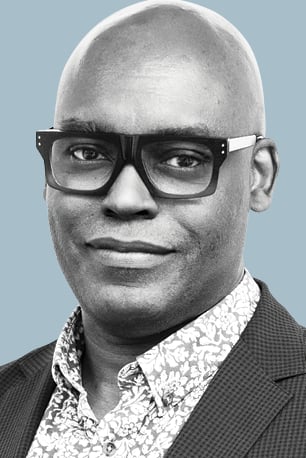
Cameron Bailey
CEO since 2021
“One of TIFF’s biggest sales almost didn’t make it to the festival”
“I started my career as a film critic for Now magazine, then joined TIFF as a film programmer in 1990. In the late ’90s and early 2000s, there were a lot of late-night bidding wars. You would often see buyers and sellers duck out of a screening midway through the film. If they were ready to do a deal, they would skip the end of the movie so they could start making phone calls.
Over the past few years, TIFF has made some massive deals. One of the most substantial was for Alexander Payne’s The Holdovers, starring Paul Giamatti. We lock down our film selections by the end of July, and by August, we’re pretty much closed for business. The Holdovers wasn’t finished in time to be part of our lineup, but we saw it and loved it. We couldn’t put it in the festival officially, but we set up a screening that would run during the same week. We invited a bunch of distributors and buyers, plus a sprinkling of the public. Within days, it was picked up by Focus, a major distributor, for $30 million—one of the biggest sales ever made at the festival. It’s very unusual for us to invite a film to the festival a second time, but in 2023, we made The Holdovers part of our official selection. It had already had its theatrical release, but we felt attached to it because its sale had happened in Toronto.”
Advertisement
→ 2023: When writers and actors went on strike, stars weren’t allowed to attend the festival to promote their films. TIFF was staring down the possibility of an empty red carpet. Luckily, some celebs found loopholes. Sean Penn, Willem Dafoe and Nicolas Cage took advantage of the fact that films without major studio affiliations could get exemptions. Actors could also appear if they’d been working in an off-screen role. Some demurred: Michael Keaton and Anna Kendrick were making directorial debuts but stayed away in support of their picketing co-workers. Ethan Hawke, though, was determined to support his movie Wildcat. After his flight was cancelled—three times—he hopped on a Greyhound bus and rode 10 hours from New York to Toronto, arriving just in time for the premiere.
2024
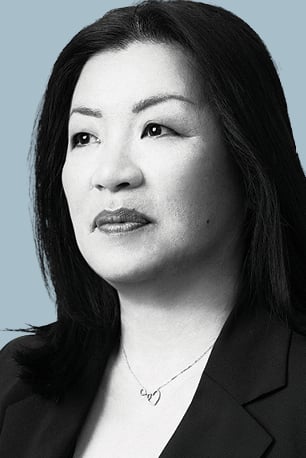
Anita Lee
Chief programming officer since 2022
“Last year, we featured two of Korea’s biggest stars”
“As a young immigrant, going to movies gave me this incredible window into other worlds and cultures. My family is Korean, so it was a special moment for me when we held the premiere of a film called Harbin last year. It features two of Korea’s biggest stars, Hyun Bin and Park Jeon-min. They’re mega-famous in Korea. We weren’t sure how well-known they would be in Toronto, but it was like the Beatles: people camped overnight outside Roy Thomson Hall to see them. The red carpet was pandemonium. It was the most well-attended premiere anyone at TIFF could remember. Now, when I go to Korea for industry purposes, it’s all I hear about.”
Hyun Bin at the Harbin premiere. Photo by Cindy Ord/Getty Images
The July issue of Toronto Life features the monster cottages of Muskoka versus the resistance. Plus, our obsessive coverage of everything that matters now in the city.