Editor’s Letter: The city’s insatiable appetite for real estate stories
Torontonians are obsessed, whether they’re in the market or not, so we devoted an entire issue to real estate: the next hot neighbourhoods, what to do about the affordability crisis, alternative housing options, and more

A few days after my wife and I moved into our first house, we were startled to learn that our new neighbours were already well acquainted with us. They knew our names and occupations and that we had a baby on the way. Having toured our place during the open house, they were aware of the interior layout. Most shocking was that they knew, to the dollar, how much we had paid. When it comes to the fishbowl world of Toronto real estate, we quickly realized, there are no secrets.
Our neighbours weren’t unusual. Torontonians of all stripes are obsessed with real estate. Gossiping about it—Who? How much? Did they overpay?—is our favourite pastime. And like a civic mood ring, real estate also tells us everything about our city and its citizens, priorities and failures, needs and wants. Given what feels like a pivotal phase in our city’s development, the moment felt ripe to devote an entire issue to the topic of real estate, in all the disparate ways it touches our lives.
Right now, the market is full of contradictions. Toronto faces an affordability crisis while a glut of condos sits unbought, even at plummeting price points. Just as bizarrely, in our quest to become a magnet for top-tier international talent, someone forgot to make sure the existing middle class—the firefighters, accountants and teachers—could afford to stick around. This year, Ontario experienced its largest population loss in a single quarter since 1951 (when StatCan started keeping track). And at a time when developers, governments and tradespeople are all eager to build, the number of quarterly housing starts in the province is at its lowest since 2009.

We brought these and other vexing conundrums into a room full of experts, including the city’s chief planner, a social housing advocate, an affordable housing executive, an academic and two leading residential developers (one rental, the other with a focus on modular homes). The result, “The Real Estate Diviners,” is an illuminating read. All agreed that the problems are solvable but that the stakes of continuing to get it wrong are sky-high.
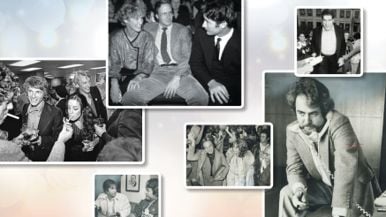
As if to drive home the point, federal housing minister Gregor Robertson recently described the Toronto condo market as being “in free fall.” One of his proposed fixes was to focus on what he calls “non-market housing,” a category that includes co-ops. They were a big part of Toronto’s story in the ’70s, kick-started with funding from the OG Trudeau government. As you’ll read in “A Co-Op Love Story,” the experiment worked, nurturing community and opportunity. In the case of Jan Champagne and Miriam Zachariah, it also fostered family.
At the other end of the spectrum, Courtney Shea delivers an investigative feature about Singa Bui, a real estate lawyer accused of embezzling millions of dollars from homebuyers. Bui and her husband then masterfully foot-dragged the court process with delay after excuse after sob story. “Pathological Lawyer” is a cautionary tale about predatory actors and the fallibility of our housing regulators.
For all the problems Toronto faces, it remains a place with much more going for it than against it, a message woven into our sprawling cover story, “Where to Buy Next.” The package features 12 neighbourhoods that are on the rise thanks to major infrastructure initiatives—particularly transit projects—that portend rejuvenation, density and elevated quality of life. For prospective buyers or sellers (or perennial speculators), consider it essential reading.
Malcolm Johnston is the editor of Toronto Life. He can be reached via email at editor@torontolife.com.

Malcolm Johnston is the editor-in-chief of Toronto Life, a role he took on in 2022 after 11 years at the magazine. He has worked as a writer and features editor, with a strong focus on investigative journalism and in-depth reporting on the people, politics and culture shaping Toronto. He is the author of a forthcoming narrative non-fiction book about the double life of Jeffery Shuman, the serial bank robber known as the Vaulter Bandit.