“My daughter was born with a disease so rare, private companies won’t fund research because it isn’t profitable”
Laura Devlin noticed that her daughter, Penny, seemed unsteady on her feet. It took her seven years to find out why

My daughter, Penny, was born on July 14, 2017, at 7 a.m. She was ten days overdue, so my husband and I were a little worried, but much to our relief, her weight was average and her vitals were strong. Penny was a smart baby and hit her cognitive milestones easily. But, when she was around six months old, we noticed that she struggled with pushing herself up. She couldn’t crawl, and when she tried to stand, she would fall and hit her head because she couldn’t catch herself. She often had bruises on her head and knees from falling over so often. We began to feel a creeping sense of unease.
We brought her to see different doctors—physiotherapists, neurologists, genetic counsellors. Every blood test and MRI came back normal, so doctors dismissed our concerns. Some babies are just floppier than others, they said. But, when Penny finally began to walk, her neck couldn’t support her head, which lolled like she was a newborn. She fell over frequently at school, and once, she knocked out a front tooth. She also struggled to climb stairs. These symptoms confirmed what we’d feared: something was not right.

We kept pushing for a diagnosis, but then Covid hit. For a while, we couldn’t take Penny to the hospital, and doctors struggled to diagnose her condition over Zoom. At the end of 2022, we managed to get an appointment at SickKids. They ran some genetic tests, but everything came back normal again, so they closed her file. It was incredibly frustrating. I felt so powerless. And though I knew we hadn’t done anything wrong, my husband and I still felt like inadequate parents.
When Penny was almost six, we were referred to Holland Bloorview hospital by a pediatrician who’d noticed that her muscles were weaker than they should be. A developmental pediatrician watched her walk across the room, climb a set of stairs and get up from the ground. She noticed that Penny’s back was really arched when she walked and that she used the Gower’s manoeuvre, meaning she “walked” her hands up her legs to push herself upright. The doctor suggested that we do a full genetic sequencing and drew a vial of her blood to send for testing.
Related: Dodgers fans have donated $30,000 to SickKids
At this point, we weren’t especially hopeful. We were resigned to the fact that we may never get a diagnosis. But, in April of 2023—almost one year later—the doctor called to schedule a meeting to discuss the test results. I got anxious and asked them to push the meeting date earlier. If they had figured something out, I wanted to know as soon as possible.

On a Zoom call, the doctors presented a full PowerPoint and informed us that Penny has an ultra-rare form of congenital muscular dystrophy called SEPN1-related myopathy. The good news was that it is not as rapidly progressive as some forms, which was reassuring. But it still affects her muscles over time, particularly those involved in breathing. The doctors also didn’t know much because the disease was so rare.
The weeks afterward felt very lonely for my husband and I. I’ve been a therapist for 15 years, so I know that whenever something bad happens, people tend to feel like they are alone on their own planet. In my case, it was Planet Rare Disease. It seemed like everyone else on earth had healthy kids, and I wondered why I’d been dealt this card. I’d been through my fair share of life’s challenges— ten years ago, after my son was born, my husband, Chris, received a diagnosis of cancer. But this felt uniquely destabilizing, and it was hard not to feel profoundly helpless when there didn’t seem to be any answers.
One night, a few months after Penny’s diagnosis, I woke up suddenly and could not get back to sleep. On a whim, I began to google how research gets funded. I was incensed to learn that rare-disease research is chronically underfunded. It simply isn’t profitable for private companies to invest in something that afflicts only a few hundred people. That night, I stumbled across the website for Giving Strength, an organization fundraising for research into SEPN1-related myopathy founded by the Curleys, a family in the US whose son had the same condition as Penny.
In my therapy practice, I’ve found that people who thrive in challenging conditions are often those who use their pain to connect more deeply with the people around them. So I reached out to Lindsey Curley. It was incredibly affirming to speak with a parent who had gone through a journey like mine. Lindsey informed me that researchers are actively studying SEPN1-related myopathy, which gave me the first spark of hope I’d felt in a long time.
Soon afterward, a friend of a friend connected me to Terry Pirovolakis, whose son had a rare neurodegenerative disorder called SPG50. Instead of giving up, as doctors had basically told him to do, he raised $4 million to fund research and clinical trials that led to the development of a gene therapy that slowed the progression of his son’s disease. Now, Terry runs an organization called Elpida Therapeutics that supports research for rare diseases.

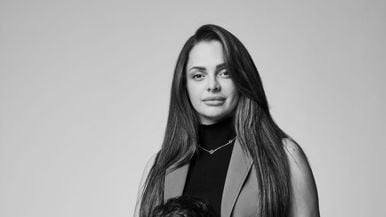
Inspired, I decided to start Penny’s Promise, an organization that fundraises for research that could one day cure Penny and support research that could unlock treatments and understanding for other related neuromuscular diseases as well. I named it after the promise we made to our daughter to do everything possible to understand her condition and find answers.
We would love to get donations from larger philanthropists, but one of the things we have prioritized is bringing together a community of people who can’t afford big splashy gifts but still want to make a difference. Penny’s Dollar Cure Club, a new fundraising model, invites folks to donate small sums regularly. We include club members in things like monthly giveaways, research updates and events. The goal is to build a community founded on hope and joy.
We work with Karen Lavery, the chief scientific officer at Giving Strength, to decide which organizations to fund. So far, we have funded Dr. Alan Beggs’s lab at Boston Children’s Hospital, which is doing groundbreaking research on the genetic basis of SEPN1-related myopathy—a critical step toward developing potential treatments and, eventually, a cure. We are also working on collaborations with University College Cork, Stanford University and some biotech companies, which can work faster than universities.
Related: A complete stranger saved my life. Fifteen years later, another one saved my son
Since starting the initiative, families with kids who have SEPN1-related myopathy from all over the world—including Germany, Scotland and Spain—have reached out to me. The family in Germany began their own fundraising drive, and they’ve already raised 10,000 euros. I feel galvanized by the momentum that is gathering, pushing forward much-needed research. Penny has really enjoyed meeting other kids like her as well.
These days, Penny plays the piano and sings in a choir. She is a big fan of KPop Demon Hunters and is excited about growing up. She wants to become a therapist like me. The process of caring for her and developing Penny’s Promise has been a story of muddling through and learning day by day. For me, that is what hope looks like: not a passive feeling but continued action to bring the world you want into existence.