“Historically, many kitchens have been driven by fear”: Six of the city’s top woman chefs on the future of Toronto’s restaurant industry
Including Eva Chin, Shauna Godfrey and Rebekah Bruce
It’s no secret that running a restaurant in Toronto in 2026 is a tough gig. You need only pay attention to the closure lists, the menu pivots and the impassioned diatribes of some of the city’s top culinary talent to prove that the climb is steep. But, amid the uncertainty, other voices are calm, confident and (mostly) hopeful.
Toronto’s growing cohort of woman chefs and restaurateurs is serving up fresh, collaborative approaches to hospitality in a city hungry for approachable and authentic yet inventive and ever-changing dining experiences. Here, six rising stars share their thoughts on leadership, role models and the future of Toronto’s dining scene.
Related: Toronto chefs and restaurateurs explain why all your favourite kitchens are pivoting

Shauna Godfrey, Maven
Maven chef and owner Shauna Godfrey choreographs a polished yet approachable Polish Jewish dining experience at her cozy Harbord Village restaurant. Though underpinned by years in Michelin-recognized kitchens, her cooking is largely inspired by her roots and her grandmother Rose. Look for Rose’s Pantry, a new shop and takeout counter opening next to Maven this spring.
On leading a successful kitchen: “I try to lead with compassion. I think creating a culture of teamwork, community and curiosity is super important to running a successful restaurant. I don’t have all the answers, but as my old biology professor once told me before a seminar I was nervous to lead: you don’t have to know the answers, you just have to know the questions. I like to talk through ideas and new ways of doing things with my team. My goal is to create an environment where people want to come to work and are excited to be there.”
On role models: “New York–based chef Paula Navarrete is a close friend and mentor. I learned a lot from her and her leadership style, like how to keep a team motivated and engaged. Danny Meyer is another role model, a skilled restaurateur known for the culture he creates for his team and the hospitality for his guests. Finally, the Roses: both of my grandmothers are named Rose. One is alive, and one passed away a couple of years ago. They were the matriarchs of their families, they both worked hard and they loved spending time with their friends and families.”
On the future of dining in Toronto: “The US is having a New England seafood boom, and I wonder if more new maritime-themed restaurants are going to pop up here. I also see chefs leaving Toronto and opening places in smaller cities. Ultimately, I think diners are looking to feel taken care of when they go to a restaurant—I don’t think warm hospitality will ever go out of style.”

Missy Hui, And/Ore
Behind the iridescent windows of And/Ore on Queen West, a Tim Burton–esque scene unfolds. Executive chef and co-owner Missy Hui oversees two distinct spaces within the restaurant: a whimsical upper level and mezzanine with sharable plates and champagne by the glass, and an underground fine-dining “cavern” inspired by co-owner Jaimie Donovan’s experience as a mining engineer.
On leading a successful kitchen: “I live by the mantra ‘cleaner, faster, better,’ though not always in that order. It’s a daily reminder that each day and task is an opportunity for growth. I also think it’s important to meet people where they’re at so you can support their personal goals. I’d love to hire someone and know they’ll be with us forever, but that’s not realistic. Everyone has their own hopes and dreams, and I want to be able to support people in achieving their goals.
“As a young cook, I was once handed a plate back by the chef and told to ‘fix it.’ When I asked what was wrong, once again, I was told, ‘Just fix it.’ I now approach leadership based on the failure of this interaction. My leadership style is built on communication, feedback and accountability for every member of my team, myself included.”
Related: Five new eastern European–inspired restaurants for midwinter comfort food
On role models: “A huge role model when I was coming up was chef Andrew Ellerby. We were working in a wildly busy and unpredictable environment, but he always treated me and my fellow cooks like we were capable of anything, and he trusted us to do our jobs. There was a patience and a pride in our team that I hadn’t experienced until his leadership.”
On the future of dining in Toronto: “The current landscape is a pile-on of challenges: rising food and living costs, commercial rent increases, tax changes, and cuts to culinary college programs and trade support. It’ll take time to feel the full effects and sort through it all. But I think that more restaurants will embrace the contrast of high-level execution in a more relaxed, comfortable atmosphere. Even in Toronto, where there’s always something new to experience, I think we’re going to see a revival of restaurant loyalty and regular guests.”

Alycia Wahn, Conejo Negro
At Conejo Negro, a vibrant bar and kitchen known for dishes layered with Creole, Caribbean and Latin flavours, chef Alycia Wahn draws on her time living in New Orleans, Memphis and Nashville to bring a unique brand of down-home cooking with a distinctly polished flair. A passion for high-quality ingredients and a dedication to developing deep flavours are paired with the dining room’s more laid-back vibe.
On leading a successful kitchen: “I believe that people work harder and more efficiently when they are happy and feel valued. Always listen to everyone, hear them out. Deal with issues immediately and try to understand everyone’s perspective. We all have a common goal, and we all have to work together as a team to accomplish it.”
On role models: “My mother; my sisters; my mother-in-law; my husband, Lamine; and our business partner, Diego. I look up to all of them, and I’m in awe every day of how talented, resilient and inspiring they are. They make me want to do better and aim higher. I couldn’t ask for better role models.”
On the future of dining in Toronto: “Restaurants are going to lean into affordability. As inflation rises, people will look for places that fall within their budgets. It’ll be a huge challenge for restaurants because our costs have gone up too. It’s a difficult situation to overcome entirely, but it helps to make the right connections with suppliers, to make as much as you can in-house and to plan well in order to avoid surprises.”

Rebekah Bruce, Bar Eugenie
Named after Eugénie Brazier—an uneducated single mother who, in 1933, became the first chef to earn six Michelin stars—Bar Eugenie’s casual approach to fine dining carries on the humility and work ethic of its namesake through rooted yet polished small plates. Chef and Alobar alum Rebekah Bruce’s contemporary flavour profiles display the occasional Filipino inflection (in honour of her mother), and the ambiance is a throwback to the casual cool of the Harbord Room, which once occupied the space.
Related: A trio of Alo alumni have opened a restaurant in the old Harbord Room space
On leading a successful kitchen: “Be yourself. Food is awesome. Yes, working in a restaurant can be challenging, but it should also be fun. There’s a time to be serious, but don’t take yourself too seriously. Taking care of your staff is just as essential as taking care of your guests. I believe in leading by example, which means looking after yourself, setting the tone and genuinely enjoying the work. Restaurants are fast-paced, reactive environments, so I try to remind myself that at the end of the day, it’s just food. We’re all human, and everyone makes mistakes—managers included. Accountability matters, but so does empathy.”
On role models: “It may sound cheesy, but I’m surrounded by incredible women who inspire me every day. I’ve had the privilege of working with so many in this industry, many of whom I’m lucky to also call my friends. My mom, my grandma and my lola all faced immense challenges to build the life I have. I carry their strength with me in everything I do, and especially in the food I cook.”
On the future of dining in Toronto: “A major trend and challenge right now is the romanticization of restaurants on social media and TV. While it’s beautiful to see the artistry celebrated, it often creates a disconnect between expectation and reality. It’s not just a $38 entrée; it’s an entire business. Behind every plate are farmers, suppliers, chefs and staff—an entire ecosystem working together to make that moment possible. There’s a growing interest in sustainability and transparency, but the reality is that doing the right thing often comes at a cost. What excites me is the possibility that, as more people adopt and support these practices as industry standards, they’ll become more accessible and sustainable for everyone.”

Eva Chin, Yan Dining Room
Tucked inside Cantonese institution Hong Shing, chef Eva Chin’s Yan Dining Room serves seasonal Canadian ingredients with regional Chinese sensibility—or “neo-Chinese cooking,” as she calls it. Her personal touch, ever-changing tasting menus and penchant for culinary collaborations have quickly established Chin as one of the city’s top chefs. Catch her at the Toronto debut of Yes Shef on March 9, a culinary event celebrating female talent from across the country.
Related: “I would absolutely hate to see it close”—Toronto chefs on their favourite (older) restaurants
On leading a successful kitchen: “The saying ‘each one teach one’ is very important to me: you teach one person and empower them to teach the next. A successful kitchen is one where the chef doesn’t have to be there every day. That’s something I’m learning—how to step back and let my talented staff cook without breathing down their necks. That’s when I consider myself a successful leader.”
On role models: “Chef Anita Lo has been my mentor and hero since 1998. Her food was some of the first I tasted that really pushed the boundaries between French and Asian cuisine. Her gentle demeanour, soft voice and strong work ethic commanded a kitchen with grace. Even though she’s retired, you can still find her every weekend at the farmers’ market, talking to young chefs and farmers, connecting with old chefs, and continuing to share her passion for food.”
On the future of dining in Toronto: “We’re in a transitional phase between old school and new school. This is partly due to the pandemic but also in light of our flaws being called out—there’s a gap in our labour, skills and industry as a whole. The hardest thing will be rebuilding a better industry. I hope to see more well-balanced dining experiences. I’m noticing more chefs’ personalities and heritage coming out and more storytelling. But this also needs to be backed by tasty, well-cooked and ethically sourced food. Diversity and cultural blending are redefining fusion; I’m excited to see more underrepresented chefs shine through.”

Taylor Wells, The Carbon Bar
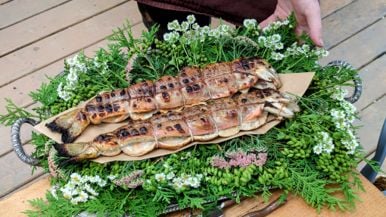
At one of Toronto’s top barbecue institutions, chef de cuisine Taylor Wells is an unexpectedly soft-spoken pit master and a culinary force to be reckoned with. Her new Coast to Coals menu honours International Women’s Day and was inspired by Wells’s childhood spent fishing for cod and preserving berries with her family in Newfoundland. “It’s an ode to generations of women who made something out of what they had and fed their families with care and creativity,” she says. The special surf-and-turf menu is available until the end of March.
Related: This new King West snack bar is from the team behind a popular barbecue joint
On leading a successful kitchen: “Historically, many kitchens have been driven by fear. I believe they run better on accountability, clarity and trust. You can have great food, but if the culture behind it is broken, it won’t last. My leadership style is hands-on. I’m on the line, working stations, teaching and setting the tone through consistency. Standards, details and how you communicate them matter. Creativity thrives when the foundation is organized.
“The best ideas don’t always come from the top—I want my team to feel comfortable contributing, asking questions and challenging ideas. That kind of culture builds ownership. If we want longevity in this industry, we have to create kitchens where people can build careers, not just survive shifts. I want my team to be proud of what they’re cooking, proud of where they work and excited to come back the next day.”
On role models: “I’m from Newfoundland, a place known for its hospitality. Growing up, it just felt natural to cook for others and take care of people. My mom cooked for our family seven days a week with care, consistency and pride. Helping out with dinner is where my love for food began. It wasn’t just about cooking; it was creating something together and feeling proud of it. Later, the first professional chef I admired was Iron Chef’s Cat Cora. Seeing a woman compete at that level made everything seem possible. Today, my partner, Rachel, constantly encourages personal growth and challenges me to see different perspectives. She brings inspiration and balance into my life and helps me evolve personally and professionally.”
On the future of dining in Toronto: “Toronto’s dining scene has always been layered, immigrant-driven, ambitious and evolving. We’re defining our own voice, one that’s hyper-local in spirit but globally fluent in flavour. Refined comfort food continues to resonate, but it should have stronger sourcing and clearer intention. Sustainability is becoming a baseline expectation.
“I’m also seeing experience-driven dining, tasting menus, chef collaborations and immersive events that make restaurants feel like cultural hubs, not just service spaces. We’re seeing more diversified revenue streams: retail products, ticketed experiences, branded events and hybrid service models that allow restaurants to be more resilient year-round.
“Diners want more than just a meal—they want context, story, authenticity. Chefs are telling deeply personal, culturally rooted stories. Toronto is one of the most multicultural cities in the world, and we’re only just scratching the surface of what that can look like on a plate. If we can balance creativity with sustainability, both financial and human, Toronto won’t just keep up with global food cities—it will help define where restaurant culture goes next.”

Nicola Brown is a freelance writer and editor with 15 years of experience creating travel, food and lifestyle content. Her work has appeared in the Toronto Star, Time Out, Canadian Traveller, Travel Life, Toronto Life, EnRoute, WestJet Magazine, CAA and Cottage Life, among other publications.