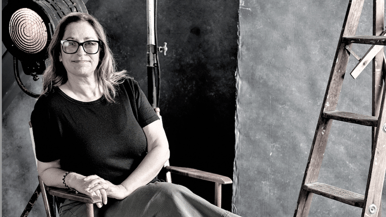
“I know so many trans girls who have been in survival mode for decades”: Zaiba Baig on her new theatre show, Kainchee Lagaa and Jhooti
Baig is no longer playing the nice girl in her diptych of plays, opening at Buddies in Bad Times this week

Actor and playwright Zaiba Baig is best known for her lead role on Sort Of, the CBC show about a non-binary millennial struggling to find their place in Toronto. Less well-known are her skills as a writer: before co-writing Sort Of, she made her debut as a playwright with Acha Bacha, a story of a young queer Muslim man wrestling with his identity. With Sort Of concluded, Baig is returning to the stage for two back-to-back original plays that will run at Buddies in Bad Times Theatre from April 1 to 18. Billed as “The Begging Brown Bitch Plays,” the diptych comprises Kainchee Lagaa, which follows a sex worker in Lahore and her brother in Etobicoke, and Jhooti, about a South Asian woman in America weaving a web of lies. We caught up with Baig to talk about mentoring trans talent and her evolution as an artist.
This show isn’t one play but two. What was the genesis of each? The first one, Kainchee Lagaa, was my final theatre school project before I graduated in 2016. I have a few siblings, and I was really interested how family trauma can destroy an otherwise pure and beautiful relationship. Over the years, it evolved from a solo show to one with a few characters. Then I wrote Jhooti in 2019, when Bruce McArthur was killing all those Brown men in Toronto. I was so angry, both because of the murders themselves and because the media kept implying that the victims were closeted gay men, which we didn’t necessarily know. That anger turned into this piece about who gets to be seen as disenfranchised when they actually might not be. When we see a Brown, trans, immigrant body, do we assume they’re locked up and burdened? I didn’t set out to write these plays together, but over time I realized that they were sisters. I wanted to challenge myself by putting them together. This is my reintroduction to the world as the angry, deeply sad person I am right now.
Where are you at emotionally? It’s not a cute time. I know so many trans girls who have been in survival mode for decades, and life hasn’t gotten any better for them in the past ten years. Then when you bring race into it, there’s a feeling that we’re not even being thought of. When I’m in queer spaces, I wonder where the Black and Brown trans girls are. Why can’t we look for the most vulnerable person in the room and make space for them? I’m frustrated and angry, and things have got to change. Sort Of was super cool, and I’m so grateful it happened, but it doesn’t mean I have endless resources now. I’m still hustling. I shouldn’t still feel this alienated in 2026. I hate that feeling.
Related: Sort Of is the best thing on TV
What made this the right time to stage these two plays? The nice girl in me died. With Sort Of, I was pushing this idea that something magical can happen with good storytelling. I spent years doing press tours talking about what it means to accept that all people are in transition, in one way or another. And yet, when some trans artists took over a small corner of TV, media and the internet, there was incredible backlash. The consequences of choosing to be visible were severe, both for me and for trans people in general. And ever since then, trans representation has been abysmal. So now I’m fighting fire with fire. I want audiences to experience what it feels like for me to fight back.
Both plays explore trans people using deception to survive. How come? Deception is a means to survival. When someone is trying to get by without the resources they need, they do whatever they can. I see so many cis women playing the most complicated, manipulative characters. Those roles are so juicy and layered. If they get to have that, I want a trans girl to have that too. That’s the big driving force. I want to ask audiences, “Will you be okay with a trans woman lying to you? Or will you react differently?”
You’ve gone from theatre to TV and back to theatre. What made you want to get back on the stage? I had a really strong urge, and I like to listen to my gut. It was like returning home: theatre is where I learned so much about storytelling, representation and my own voice. TV totally changed my life, but it was also a steep learning curve. Before Sort Of, I had never written, produced or acted for TV before. Theatre is something familiar, and I wanted to see how I could do it differently this time. What would it be like if I really owned this production and led it with the integrity and compassion I’ve been developing over the years?
What are you doing differently? I’m a strong believer in leadership being executed with as much listening as possible. A leader works with literal human beings, and yet I’ve been in too many situations where the leader isn’t interested in meeting people’s needs. I’m just so gagged by that. When you really hear someone out, their work improves. I wanted to lead this process by seeing everyone for who they are and responding to everything that comes up. It’s not all nice and wonderful—there’s an edge to this kind of leadership. I’m here to do a job, not become family. Mentorship has always been huge for me as well: I wouldn’t be here today if it weren’t for cool playwrights who paid for my coffee and gave me notes on my first play.
Related: An unfettered roundtable with CanCon’s queer mafia
Tell me more about the trans mentorship program you’re running with this production. Right now, trans artists are not being invested in. They’re being given minor assistant or small character roles or being thrown onstage with no support. I’ve seen that for years in this city. Now that I get to call the shots, I want to close that gap. I knew I wanted Angel Glady to be the lead actor on this project. She’s worked on a number of shows in India but didn’t have as much experience in Canada. We’ve made space for her to adjust, and it’s been powerful to watch her take ownership of her character. I’m thrilled because I haven’t seen anyone quite like her onstage in Toronto.
You’ve talked about wanting to attract non-theatre-going audiences. What are you hoping they find? Both of these plays are very Brown stories: they touch on themes of immigration and displacement, how it feels to leave a home that’s familiar and have to come to terms with a new place. I want to show that it’s okay to embrace these messy nuances. Transitioning doesn’t have to be the most beautiful and perfect thing, and neither does moving from one country to another. We’re going to do a night that’s only for South Asian audiences. That’s where my focus is.
What’s next for you? I acted in a beautiful little Canadian independent film last summer that I can’t say too much about. And I’m also working on a film script right now, as well as producing. I’m not giving up on film: I’ll go anywhere people will have me. In my dream world, I’d be always moving across theatre, film and TV. But, in the times that we’re in, there are barriers. It’s challenging, but I’m not defeated. I move slowly—I like to think a lot and move in intentional ways. But I’m not going away.
This interview has been edited for length and clarity.

Anthony Milton is a freelance journalist based in Toronto specializing in long-form magazine writing. He previously worked as an assistant editor at Toronto Life, where he launched the Front Row newsletter. He regularly contributes all sorts of stories to the magazine, including deep dives on sports, business and housing as well as short-form commentary on our ever-changing city, from its obsession with cherry blossoms to its maddening NIMBYism. His work has also appeared in Maclean’s, Ricochet, TVO, the Trillium and more.