Becoming El Jefe
Before Ryan Wedding landed on the FBI’s Most Wanted list as a high-level associate of El Chapo, he was a bright-eyed kid from Thunder Bay. The inside story of how an Olympic snowboarding prodigy became one of the world’s most dangerous and powerful drug lords
From the moment he was born, Ryan Wedding was the family darling. He belonged to a sporty, tightly knit clan with a shared love of the outdoors. In the 1960s, his grandparents, Laurence and Marlyn Spiess, had purchased the Mount Baldy Ski Area, a ski club near Thunder Bay. Their ambitions were modest. Marlyn sat behind the ticketing desk, and Laurence, who carried a key ring befitting a prison warden, did triple duty as manager, landscaper and handyman. Mount Baldy wasn’t a ritzy destination resort but a scrappy hub for local families. It had an old rope lift, a T-bar pulley, and a chalet that sold hot dogs and Molson Canadian. Skiing was the family religion. The Spiess’s son, Craig, coached the women’s national alpine ski team in the early ’90s; their daughter, Karen, married an engineer named Rene Wedding who’d skied competitively in university. Ryan Wedding was born on September 14, 1981, the first son of the third generation. Laurence had him on skis almost as soon as he could walk.
As a child, Ryan was daring and adventurous, with a capacity for intense focus. He’d sit behind his father’s drafting table for hours, drawing perfectly scaled buildings, then go out on his bike, alone, to explore the logging trails that wended through the surrounding boreal forest. When Ryan was still young, his grandfather put him behind the wheel of the family car and showed him how to work the transmission. He learned how to use the pedals before his feet could even reach them. But his appetite for risk went beyond family-sanctioned activities. Occasionally, he’d disappear, and his parents would find that he’d snuck into a neighbour’s garage to rummage through their tools.
Related: The thief, the cam girl and their whirlwind fraudulent romance
Wedding started snowboarding at age 12, shortly after he moved with his parents and two younger sisters to Coquitlam, BC, for his dad’s work. He won the first race he entered and caught the attention of Bob Allison, a former professional skier, windsurfer and rock climber, who was building a team of elite snowboarders to represent Canada. Wedding was the baby of Allison’s team, the cherubic blue-eyed kid. At national competitions, he’d head to bed early with his teddy bear while his teammates, a band of roofers and roughnecks, hit the bars and tried to get laid. Come morning, though, Wedding was as bold as any of them. He was fearless on the slopes, barrelling headlong down steep mountain faces over icy terrain and carving perilously close to the snow. At home with his dad, he occupied himself with mini experiments, testing out boots and bindings to see which would enable him to glide just a bit faster.

At 15 years old, Wedding made the Canadian national team. Soon, he was competing internationally in the Alps and the Andes. Success fed his rapidly growing ego—he became obsessed with winning. He took home bronze at the junior world championships in 1999 and silver at the same competition two years later. People started mentioning him as a potential challenger to Ross Rebagliati, who’d won gold at Nagano in 1998. And then Wedding was chosen to represent Canada at the 2002 Winter Olympics in Salt Lake City.
For a 20-year-old athlete who wanted to become a household name, Salt Lake City could have been a dream come true. But, for Wedding, it was the end of a dream. At the giant slalom event on Valentine’s Day, he came out of the gate aggressively, carving deep into the slope. It was a poor choice for the conditions of the day: the sun had melted the snow from powder into slush, which makes carving risky. Wedding managed to stay upright, but the initial jolt threw him off his rhythm. He placed 24th, his time a second too long to qualify for the next round. That day, Wedding learned a crushing lesson: you can be extraordinarily, even freakishly talented—you can dedicate your life to a single pursuit, pushing your body far beyond what most people consider possible—and, statistically speaking, your efforts probably won’t be enough. Not everyone gets to win.
Snowboarding was never a reliable route to fame anyway. Even the most successful athletes can chase adrenalin for only a handful of seasons before their bodies give out. Of the first-generation Olympic boarders who represented Canada at Nagano, Salt Lake City, Turin and Vancouver, only Rebagliati transcended his sport, partly because of his athleticism and partly because of the controversy after he tested positive for cannabis. The overwhelming majority of Olympic athletes live and die in obscurity. Wedding gave up on the Olympics, but he didn’t give up on his ambitions. Instead, he learned something that eludes many of his athlete peers: if adventure, glory and status are your goals, there are other ways to get them.
After Salt Lake City, Wedding moved to Vancouver to study at Simon Fraser University, but instead of applying his competitive streak to academics, he hit the weight room. According to a profile in Rolling Stone, he transformed his body from the lithe, athletic build of an alpine racer to the muscular, thickset physique of an action-movie star. He told a friend that he resented the men at the gym who were bigger than he was, and he set out to surpass them. For work, he picked up shifts as a bouncer at Vancouver-area clubs, many frequented by gang members in designer streetwear and Swiss watches. Soon, Wedding was dressing like them.
Related: Inside the rise and fall of the Vaulter Bandit, the 21st century’s most notorious bank robber
After two years, he dropped out of school. With a $250,000 loan from his father, he bought and quickly flipped a house in Maple Ridge, an affluent garden suburb of Vancouver. He then set himself up in a condo with 30-foot ceilings in Vancouver’s ritzy Westwood Plateau neighbourhood, outfitting the space with a pinball machine and a video game station with race car seating. In his building’s garage, he stored snowmobiles, a Ducati and a BMW M5.
If his lifestyle seemed too lavish for a bouncer with a bit of real estate cash, that’s because it was. To finance the designer clothes and luxury vehicles, Wedding started a business on a rural property in Maple Ridge. It was owned by a friend of his who called it Eighteen Carrot Farms, but the real crop was cannabis—and Wedding was mass-producing it in a warehouse on-site. Twice a month, he drove out to the property to harvest some of its 6,800 plants and deliver his yields to a supplier.
In the summer of 2006, the authorities received a tip about Wedding’s operation. When the RCMP searched their database, they learned that Wedding had been named in a 2004 investigation into marijuana grow-ops. Eighteen Carrot Farms was consuming 2,000 kilowatt hours of electricity per month, far beyond the average for a warehouse of that size. In a non-residential building, there are only a few practical uses for such an enormous amount of energy. Powering grow lamps is one of them.
On September 22, 2006, the RCMP raided the property and discovered a mix of dried cannabis and live plants worth an estimated $10 million, plus a shotgun and numerous rounds of ammunition. But they didn’t find Wedding at the site, and they were unable to make a strong enough case against him to justify pressing charges.
By the time Wedding’s grow-op was busted, he had some sinister people in his orbit
Looked at one way, Wedding’s early forays into criminality were unremarkable. BC was the epicentre of the North American cannabis industry, which had grown precipitously over the late 1990s and early aughts, aided by the proliferation of organized crime syndicates. Between 1997 and 2003, law enforcement investigated 25,000 grow-ops in the province, likely a tiny proportion of the overall number. Police couldn’t keep up, so they focused their limited resources on shutting down facilities rather than prosecuting suspects. Out of every 100 people charged with growing cannabis in BC, maybe eight or nine would see prison time.
Arguably, Wedding wasn’t doing anything outlandish: he was just getting in on the local industry, and he happened to be good at it. But the scale of his operation set him apart. To turn a grow-op the size of Eighteen Carrot Farms into a profitable business, one would need to rub shoulders with experienced criminals. All that product had to go somewhere, after all, and in the early 2000s, much of it was going to points south. The work of moving plants in bulk across international borders was done almost entirely by criminal organizations: the Hells Angels, the largest biker gang in the world; the United Nations, whose members practise Thai kickboxing and swear fealty to an ancient samurai honour code; the Independent Soldiers, who, in 2003, got into a deadly shootout with the Hells Angels on the dance floor of a Gastown nightclub; and the Red Scorpions, who massacred six people in a Surrey apartment complex in 2007, leaving them face down in a pool of blood. By the time Wedding’s grow-op was busted, he had sinister people in his orbit.
One of Wedding’s new associates was Hassan Shirani, a Persian Canadian who had been implicated in a police investigation into a Vancouver-area murder, though he wasn’t ultimately charged with the crime. Shirani was useful to Wedding because of his connections to a niche corner of the underground economy: a money-transfer system known as hawala that dates back to eighth-century India and still has networks around the world.
Hawala runs on trust. If you live in Toronto and are seeking to send, say, $10,000 to your brother in Tehran, you might give the cash to a hawala broker (or hawaladar) operating out of a dry-cleaner’s or car dealership or convenience store. The broker will put the money in his safe. For a fee, he’ll instruct a fellow hawaladar in Tehran to make the same amount available to the intended recipient, who will identify himself by an agreed-upon code word. Hawaladars keep track of inflows and outflows, and every once in a while they coordinate with colleagues to settle up outstanding balances, perhaps through cash transfers, exchanges of goods or professional favours. Because the network is informal, it’s ideal for law-abiding Canadians who distrust the banking systems in their countries of origin. Because it leaves no digital record, it’s ideal, too, for criminals looking to discreetly move money across international borders.

In 2008, Wedding turned to Shirani to help him in a new venture, one with the potential to be much more lucrative than cultivating cannabis. Together, the duo hatched a plan to smuggle 24 kilograms of cocaine into Canada via San Diego. That spring, Shirani met with a hawaladar in Vancouver and deposited $300,000 that he would then be able to draw on in California. Wedding and Shirani flew to Los Angeles on June 10. At LAX, they met up with a Russian Canadian named Michael Krapchan, whom Shirani had hired to set up the purchase. Krapchan had also brought along the seller, a menacing-looking heavyset ex–KGB agent named Yuri.
Related: Inside fallen Toronto Raptor Jontay Porter’s sports betting scandal
The situation was tense. Yuri was under the impression that the four men would drive directly from the airport to San Diego to do the deal, and he became agitated when Shirani and Wedding explained that they needed a few days to retrieve the funds. Shirani and Wedding were mystified: did Yuri really think they’d flown in from Canada with hundreds of thousands of dollars in their suitcases? Yuri asked, angrily, why he’d even been brought to the meeting.
Everyone was suspicious of everyone else. Nevertheless, they agreed to move forward. Over the next 72 hours in LA, Shirani and Wedding visited malls, restaurants and hookah bars, and they stopped by a Persian rug store that was also a hawala brokerage. There, they retrieved a portion of their cash: $120,000 in American bills, bundled up in newspapers. They hid the package in a drawer below the TV in their hotel room.
On June 12, Shirani and Wedding met with Krapchan in Anaheim and gave him $17,000 (US), enough to procure the first kilo of cocaine. The next day, to inspect the sample, they drove to a San Diego hotel room that Krapchan had rented. Krapchan headed off in a rental car to buy the drugs from Yuri while Shirani and Wedding holed up in the room—they believed, erroneously, that if the cops showed up at the buy and they weren’t present, they couldn’t be prosecuted. As lunchtime drew near, the guys grew hungry and impatient. After an hour and a half, they ventured out to get food—only to be quickly apprehended by the FBI, which had arrest warrants for both of them.
The whole thing had been a set-up. Yuri, the ex–KGB agent, was really a confidential police informant who’d been wearing a wire at the LAX meeting. The cocaine he’d sold Krapchan in San Diego had been given to him by the feds. As soon as Krapchan had completed the deal, agents arrested him, then headed to the hotel to round up Shirani and Wedding.
Both Krapchan and Shirani pleaded guilty for participating in the plot. Wedding pleaded not guilty and stood trial in San Diego in November of 2009. His mother and two younger sisters attended the trial, dismayed but supportive, firm in their conviction that Wedding was, at worst, a bit player in the scheme.
In the courtroom, Wedding’s lawyer made this exact argument, claiming that Shirani had brought Wedding along as a fall guy. To create the impression that Wedding was bankrolling the entire operation, the lawyer said, Shirani had told Wedding that his credit card was maxed out, tricking him into shelling out for daily expenses. When the conspirators discussed business, by phone and in person, they frequently spoke Farsi or Russian, languages Wedding didn’t understand. Even when speaking English, the men used code words, referring to the drugs as “cars.” Perhaps, the lawyer argued, Wedding really believed that he was in LA to buy automobiles.
In his testimony for the prosecution, Shirani told a different story. He conceded that he’d managed the hawala transfer to the LA rug store and that he’d arranged for the drugs to be smuggled into Canada, but he insisted he was just the logistics guy. Wedding was the ringleader—the man who’d instigated the scheme and put up most of the money.
Which version of the story was true? Brett Kalina, one of the FBI officers who arrested Wedding in San Diego, says he suspects the latter. If Wedding was a bit player in the plot, Kalina argues, he didn’t present like one. At the San Diego hotel, Wedding was dressed head to toe in Ed Hardy gear, with a Breitling watch as heavy as a paperweight. He was physically imposing, having reached a level of bulk that can be achieved only through steroid use.
Wedding said almost nothing to Kalina during his arrest. He was eerily silent—until the strip search at the detention facility, during which he saw Kalina watching him and called him a “faggot.” The slur was shocking because it was so unusual. “Typically, when people are arrested, they try to make nice,” says Kalina. “They’re vulnerable. They know who has power at the moment and who doesn’t.” Kalina remembers Wedding as the most hostile suspect he’s ever arrested.
During the 17 months Wedding spent awaiting trial, he was held at the Metropolitan Correctional Center in San Diego, where the FBI monitored his calls. These phone conversations revealed that Wedding was a callous and calculating operator. He had as many as five girlfriends back in BC, all of whom believed themselves to be dating him exclusively. At Wedding’s behest, they would wash his cars, clean his condo, or pick up money from his associates and use it to pay off creditors. Wedding spoke to male colleagues on the phone too, bragging about the “good connections” he was making in prison.
He left Canada a mid-level drug smuggler and returned a well-connected, hardened criminal
This was likely true. Because of its proximity to Tijuana, southern California is one of the hottest spots in the US-Mexican drug trade. For anyone looking to meet well-connected drug traffickers, there may be no better place on earth than a San Diego jail. And Wedding was exactly the kind of person Mexican cartels are known to seek out: a white Canadian with an English name, someone who doesn’t fit the stereotype of a cartel associate and can therefore do business abroad without arousing suspicion. “We knew we were giving Wedding all the contacts he needed to return to a life of crime,” Kalina says ruefully, “but there was nothing we could do about it.”
On November 30, the jury found Wedding guilty of conspiracy to distribute cocaine. At his sentencing hearing on May 6, 2010, Wedding finally struck a note of contrition. “What I did was completely out of character for me, and it is a personal mission of mine to rebuild my reputation,” he said. “As an athlete, I was always taught that there are no second chances, and, well, I’m here asking for exactly that.” The judge imposed a lower sentence than he’d initially intended. At the time, 80 to 100 months was standard for such crimes. Wedding got 48 months, minus time served.
He was sent to the Reeves County Detention Complex in Texas, a private prison populated mainly by migrants awaiting deportation. On Valentine’s Day in 2011, exactly nine years after he’d competed at Salt Lake City, Wedding, then 29 years old, got married in prison to a Persian Canadian entrepreneur and caterer from BC. Later that year, his new wife would become a person of interest in a police investigation into a Vancouver-area kidnapping, in which a man was held captive for 20 hours, at times with a gun to his head. In 2020, her name would come up again in relation to a police raid on a grow-op in Abbotsford, BC, during which the cops seized two and a half tons of cannabis. The woman was never charged in connection with either crime. When contacted by phone, she said, “These cases have nothing to do with me.” When asked about her marriage to Wedding, she added, “It was a long time ago. I live a normal life. I have kids, and I’m remarried.”
Was the union a love match? Maybe, but it’s more likely that it was a strategic business move. A source close to the San Diego investigation pointed out that, if you’re married and imprisoned, you can sometimes get permission to talk to your spouse on the phone without anyone listening in. One thing is certain: despite what Wedding told the judge at his sentencing hearing, he had no intention of going clean.
Wedding was released from prison and deported to Canada in December of 2011. If he’d left the country a few years earlier as a mid-level drug smuggler, ambitious but green, he was now returning a new man—well connected and hardened by prison. He settled in a luxury condo in downtown Montreal, despite having no legal source of income, and soon established himself as a drug kingpin. Drawing on his newfound understanding of drug-trade logistics, he organized far more sophisticated schemes than the ones he’d tried on the West Coast. One of his associates was Philipos Kollaros, who had once been arrested in Toronto with millions of dollars’ worth of cocaine. With Wedding’s help, Kollaros made a plan to bring hundreds of kilos of cocaine into the country by sea, from Saint Kitts to Newfoundland.
Kollaros knew of a man who purportedly owned a sailboat brokerage and ran a side hustle bringing cocaine from the Caribbean to Atlantic Canada. His name was Joe, and he was exceptionally well connected. Over the previous year, he’d peddled his shipping services to drug smugglers across the country. With an Ottawa restaurateur, Joe had hatched a plan to bring in 3,000 kilograms of cocaine from a pickup point off the coast of Antigua. With a 60-year-old career criminal from Montreal, he’d plotted to move 500 kilos of coke along the same route. And with a pair of Nova Scotia brothers connected to the coast guard, he’d created a lookout system to ensure that his boats could evade law enforcement.
Kollaros was in contact with Joe about the possible Saint Kitts shipment, and he introduced Joe to “the man in charge”: Wedding, who lived a short walk from Kollaros’s Montreal apartment. When Joe met Wedding, he knew immediately that he was dealing with a sophisticated criminal. Wedding asked Joe detailed questions about the storage capacity of his boats and helped him design a plan to transfer the contraband from a large research vessel, which would pick up the drugs in Saint Kitts, to a fleet of smaller fishing trawlers, which would bring the haul to shore, inconspicuously, in Newfoundland.
The only hitch in the plan: Joe was really an RCMP operative, referred to in court documents as “Undercover Officer Joe,” who’d infiltrated Canada’s extensive underground drug-trading networks as part of an initiative called Operation Harrington. The sting was designed to target the Mexico-to-Canada cocaine trade, a route that had ballooned in size and become so lucrative that it could be run, on the Latin American side, by only one person: Joaquín “El Chapo” Guzmán, the most powerful drug lord in the world. The semi-literate child of a farming family in the Mexican state of Sinaloa, El Chapo had become a billionaire by building up the regional Sinaloa Cartel into the biggest drug-smuggling enterprise in history.
At the time of the Harrington sting, the Sinaloa Cartel was doing business in 50 countries, and it was responsible for the majority of the narcotics that moved across the US-Mexico border. In Sinaloa, the cartel basically ran a parallel state. It owned hundreds of businesses, from water parks to daycares; it financed roads and schools; and it bought off the very officials who were supposed to bring it to justice. The cartel was also legendary for its acts of brutality—kidnappings, public decapitations, shoot-outs at funerals in which entire families were slaughtered. As head of the cartel, El Chapo had presided over 34,000 murders, built a secret network of subterranean railroads at the US-Mexico border and been arrested several times, only to break free by, for instance, hiding in a prison laundry basket or directing associates on the outside to tunnel him out of his cell.
In the early 2010s, El Chapo was specifically targeting Canada for his exports. The domestic price of cocaine was high, and because Canada wasn’t then a focal point of US drug-trafficking investigations, he considered the country a safe place for his subordinates to meet with international smugglers or with suppliers of drug precursors. To that end, he’d made inroads with Canadian contacts, people with extensive knowledge and power in the local drug trade. When El Chapo had sent high-ranking deputies to Montreal, they’d met with Kollaros—and probably also with Wedding.
But, on April 20, 2015, before any cocaine could actually enter the country aboard Joe’s ships, the RCMP pounced, issuing 15 arrest warrants, including ones for Wedding and Kollaros. They were both charged with conspiracy to import and traffic cocaine, and Wedding got an additional charge for trafficking. The size of the combined conspiracies was staggering. People living in at least seven Caribbean and Latin American nations were implicated in the Harrington sting, which involved an estimated 15 tons of cocaine, worth at least $750 million.
The Harrington defendants suffered a range of fates. Some pleaded guilty and got lesser sentences; others went to trial and wound up serving hard time. It’s unclear whether Kollaros cut a plea deal with the Crown, but he ended up serving a mere day in prison after getting credit for time in remand. That’s not to say he got off lightly. On the evening of November 7, 2018, Kollaros was hanging out at Café Cubano, an old-school coffee shop in Montreal’s Little Italy, when a man strode in and shot him. Kollaros died in hospital later that night.
The murder has not been solved, although one person—Wedding—had obvious reasons to want Kollaros dead. Kollaros knew all the details of the Saint Kitts plot and could testify against Wedding at a later date. Plus, it was Kollaros who had foolishly brought Joe, the undercover operative, into the Saint Kitts operation in the first place. If Wedding plotted the murder, though, he surely did so from afar. In April of 2015, when the RCMP showed up at his Montreal condo to arrest him, he had already left the country.
Police believe that Wedding fled Canada directly into the arms of the Sinaloa Cartel and went into hiding, probably in Mexico, under their protection. In exile, he was bolder than ever. According to the US Department of Justice, he built his drug smuggling enterprise into a billion-dollar organization, which now moves 60 tons of cocaine per year—worth nearly half a billion dollars—most of it through the United States and into Canada. He has collected an impressive list of aliases: RW, James Conrad King, Buddy, Giant, Public Enemy, El Toro (“The Bull”) and El Jefe (“The Boss”). And he’s become the kind of person who kills, sometimes carelessly, without compunction.
Jaspreet Kaur Sidhu, a 28-year-old Caledon woman, became one of his many victims. One night in November of 2023, she was getting ready for bed when she saw a masked man in her hallway. She had a full house: her father, Jagtar, and mother, Harbhajan, were visiting from India and staying in the rental home she shared with her brother, Gurdit, who happened to be out that evening.
Jaspreet recalls the events of that night only in fragments. She remembers hearing her mother scream. She remembers the sound of shots being fired, followed by a horrifying silence. She remembers attempting to stand up, keeling over as a bullet pierced her leg and then crawling, bloodied and semi-immobilized, across her bedroom floor to pick up the phone, prop herself up on a dresser and dial 911. A friend who lived downstairs came outside when he heard the shots and saw a gunman escape into a pickup truck. The vehicle was later found, abandoned and in flames, on a rural stretch of road 20 minutes away.
Jagtar died before the paramedics arrived at the home. Harbhajan, who’d been hit with 22 bullets, died in hospital 13 days after the attack. And Jaspreet, who was hit 13 times, remained paralyzed and unconscious for a month before awakening and slowly regaining her mobility. She and Gurdit were devastated by the attack. Who on earth would want to kill them and their kindly parents?
It wasn’t until almost a year later that the FBI and the Ontario Provincial Police would offer them an answer: they believed the killings had been ordered by Wedding. Their home was owned by a company that has been linked to illegal trucking activities. Wedding may have been trying to retaliate against the previous residents or the owners for a stolen drug shipment. The Sidhu family were the victims of mistaken identity.
In order to run his lethal operation, Wedding had amassed a vast and complex web of subordinates and collaborators. One such mid-level operator was Jonathan Acebedo-Garcia, a Colombian Canadian who grew up in Montreal, where he worked for his family’s cleaning company. In 2009, US agents searched Acebedo-Garcia’s car at the New York–Ontario border and found 23,000 hits of ecstasy laced with meth. Acebedo-Garcia pleaded guilty to conspiracy to traffic drugs and got a four-year sentence, which he partially served at Reeves County, in Texas. That’s probably where he met Wedding, who was serving time there for the San Diego operation. By 2024, according to police, Acebedo-Garcia was working directly with Wedding’s second in command, Andrew Clark, a 30-something elevator mechanic from Toronto who’d left Canada for Mexico in 2022. Acebedo-Garcia communicated with Clark over Threema, an encrypted messaging app, to help arrange Wedding’s drug-trafficking operations from afar.
On February 20, 2024, at Wedding’s and Clark’s direction, Acebedo-Garcia visited an auto body shop in the GTA, where police say he met with Hardeep Ratte, the Brampton-based owner of a long-haul trucking company, and Ratte’s nephew, Gurpreet Singh. At the meeting, court documents allege, Ratte and Singh agreed to truck shipments of cocaine from southern California into Canada for a flat rate of $220,000 per load. Representatives from Ratte’s trucking business would drive down to LA to meet with guys from the Wedding enterprise. Acebedo-Garcia would provide Wedding’s men with a dollar-bill serial number; the guys from the trucking company would use that number to identify themselves. Wedding’s associates would then hand over a shipment of cocaine—up to 350 kilos per run—which had been stashed in safe houses around LA. Ratte’s guys allegedly planned to smuggle the contraband into Canada via secret compartments in their trucks.
While these shipments were being arranged, Wedding and Clark were busy eliminating their enemies. Clark had been grooming a young, boyishly handsome man named Malik Cunningham to work as an assassin. He had even flown Cunningham, who’d recently been released from the Toronto South Detention Centre, to Mexico for military-style training in small arms, long guns and target shooting. Then he sent Cunningham back to Canada with a lengthy hit list.
Cunningham’s first assignment from Clark, for which he was paid $100,000, was to drive to the Niagara home of Randy Fader, a 29-year-old American and Canadian citizen, and, as Clark put it in his instructions, “blow this guy’s top off.” On April 1 of last year, he did just that, shooting Fader execution-style in his driveway before fleeing the scene. Exactly what Fader had done is unknown, but clearly he’d made an enemy of the Wedding enterprise. That job now complete, Clark, communicating over Threema under the pseudonym Mero Wero, started preparing Cunningham for more lucrative hits: $200,000 to murder “a realtor in Van,” more than twice that amount for “some Arabs” in Toronto and $1 million for a person in Dubai—all of them had antagonized El Jefe in some way.

On April 14, 2024, Cunningham slipped up. He drove the same car he’d used as his getaway for the Fader murder to a GTA funeral parlour where attendees were mourning the victim of a recent homicide. York Regional Police say they spotted the fraudulent plates and, believing the car to be stolen, pulled Cunningham over and arrested him. When they searched it, they found four cellphones, multiple rounds of ammunition and $100,000 in cash. On Cunningham’s phone, they found the Threema messages between him and Clark.
Police had a second lucky break in the Wedding case. In early 2024, they convinced Acebedo-Garcia to flip. He was the ideal informant—trusted, well connected and enmeshed in the organization. At last, they had a way in. Drawing on information from Acebedo-Garcia, the authorities commenced Operation Giant Slalom, a cross-border investigation into the Wedding criminal enterprise. Last summer, they raided LA safe houses, stopped truck drivers at the US-Canada border, and picked up Ratte and Singh—the guys from the Brampton trucking company—at their Ontario homes. Law enforcement confiscated nearly two tons of cocaine, worth more than $30 million. And on October 8, the Mexican navy descended on a restaurant in Guadalajara and captured Clark, who was later extradited to the United States. All told, 14 men, eight of them Canadian, were arrested. Cunningham has been charged with murder. Ratte and Singh are charged with conspiracy to export, possess and distribute controlled substances and continuing a criminal enterprise. All three are in custody but have not yet entered pleas. Clark is facing nine charges, including murder and attempted murder. He has pleaded not guilty to all counts.
The State of California scheduled a trial for May of this year, with Acebedo-Garcia as the star witness. But, on January 31, Acebedo-Garcia was having lunch at El Indio, a shopping mall in Medellín, Colombia, when a man carrying a handgun with a silencer walked up and shot him dead. Acebedo-Garcia’s murder threw the case against Wedding’s associates into disarray. His testimony would have been the centrepiece of the trial, the thread that sewed the various scraps of evidence into a coherent narrative. Without him, the state has to find a new strategy—or a new star witness. The trial has been postponed until February of 2026.
The FBI has successfully infiltrated Wedding’s networks, rounded up some of his closest collaborators and coordinated a manhunt across multiple countries, but Wedding himself still eludes them. They believe he’s somewhere in Latin America, and they’ve added his name to their roster of 10 Most Wanted Fugitives, a list that once included Osama bin Laden and the legendary Boston crime boss James “Whitey” Bulger. The US State Department is now offering $10 million—the same amount it offered for El Chapo’s sons—to anybody who provides information that leads to Wedding’s arrest.
Still at large and still at work, Wedding is like a malevolent ghost: in Canada, he’s absent in the flesh, but his presence is felt. His name came up again in June, in connection with Operation Pelican, a series of coordinated Peel police raids on trucks stationed in the GTA or attempting to cross the Canada-US border. The busts led to nine arrests and the seizure of 479 kilograms of cocaine.
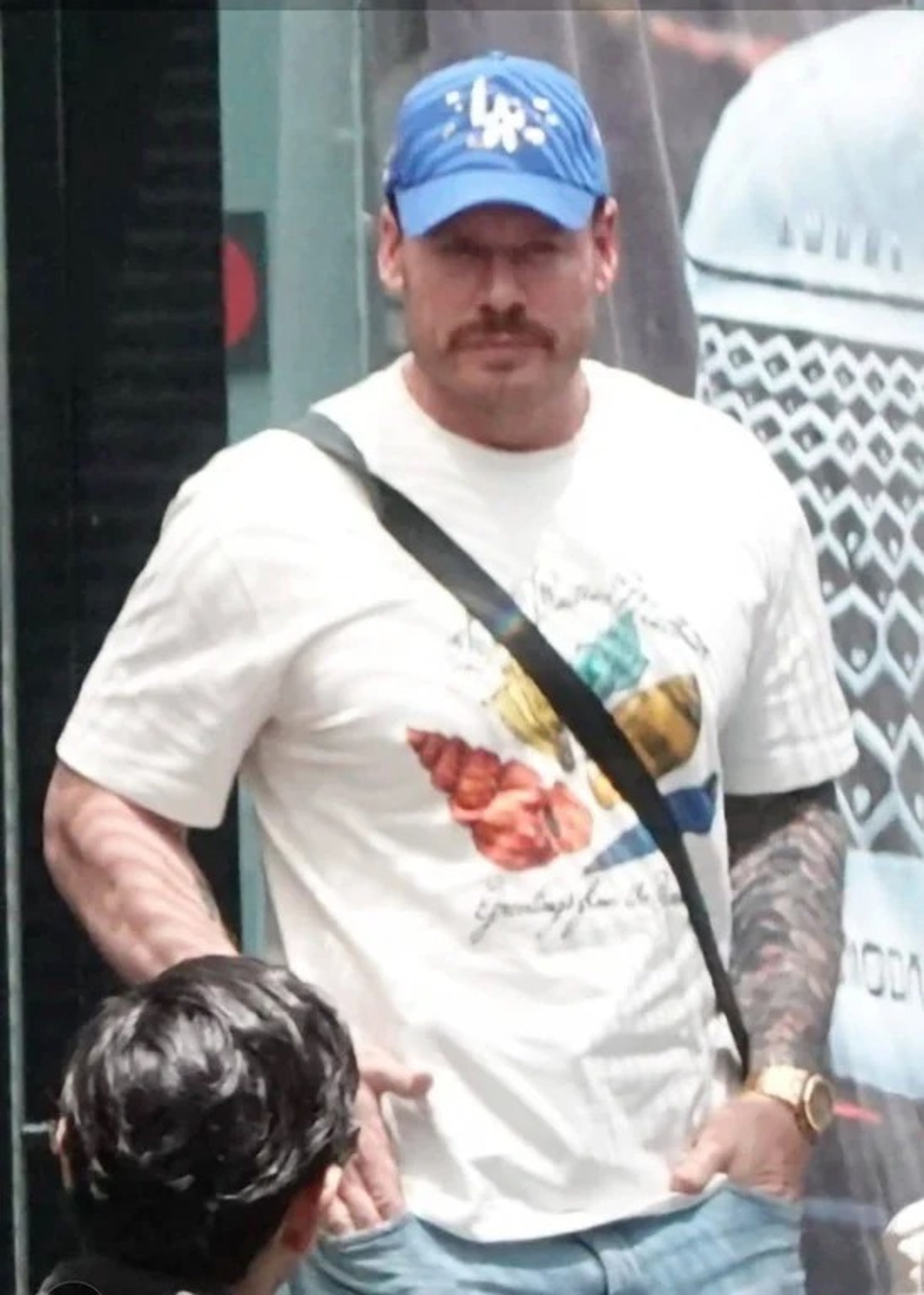
The FBI has released two recent photographs of Wedding. The contrast between these images and the Olympic press shots from 23 years ago is jarring. Gone is the bright-eyed, baby-faced dreamer; in his place is a scowling, bulky, mustachioed man. In one shot, he’s wearing a $1,000 Louis Vuitton T-shirt and what appears to be an LA Dodgers cap—a reference, perhaps, to the city where he made his debut as an international drug smuggler and where he still runs a network of stash houses. Kalina, the man who arrested Wedding in San Diego, believes that the former Olympian is living his best life—ensconced in a mansion, wealthy beyond his wildest dreams.
But, as Wedding has become more dangerous, he’s also become more endangered. Facing tariff threats from the Trump administration, Mexico has ramped up efforts to capture cartel leaders, using special forces and the navy to avoid relying on corrupt local officials. The addition of Wedding’s name to the FBI’s Most Wanted list means that the US government will spend essentially whatever it takes to hunt him down. When the world’s richest country decides it wants somebody that much, it usually gets them.
Wedding can’t even rely on his allies to protect him. El Chapo was captured and extradited to the US in 2017. He’s locked up in a maximum-security facility in Colorado. On July 25, 2024, Ismael Zambada, a top lieutenant in the Sinaloa Cartel, was reportedly kidnapped by men working for El Chapo’s son, Joaquín Guzmán López, and both have since been arrested. The rupture threw the cartel into civil war, leading to highway blockades, shoot-outs and aerial bombings. In one macabre spectacle, members of one Sinaloa faction sent a cooler decorated with wrapping paper and bows to a rival faction. In it was a severed human head. Since the infighting began, cartel leaders who once walked around openly in Sinaloa have gone into hiding or fled to other Latin American countries.
Wedding’s story is surely nearing its denouement. Perhaps he’ll be captured by special forces and brought to LA to stand trial, at which point his parents and sisters—who live normal lives as engineering consultants and gerontologists and health care administrators—may get to see him, likely for the first time in over a decade. At a minimum, he’ll face life in prison. Or maybe he’ll be murdered by rivals before law enforcement can get to him. The last act of his story will likely be sensational. Perversely, Wedding will have achieved his dream: he will have solidified his place as Canada’s most famous snowboarder.
This story appears in the August 2025 issue of Toronto Life magazine. To subscribe, click here. To purchase single issues, click here.
The Latest



Simon Lewsen is a feature writer and a regular contributor to Toronto Life, Maclean’s, the Walrus, Report on Business, and the Toronto Star. He writes the monthly City Beat column on art and architecture for Designlines, and he teaches writing at the University of Toronto.